Turning Busy Schedules Into Tournament Wins
Racing from school pickup or the office to a chess tournament in Manhattan has become normal life for many families and adult players. The day is already full, but there is still one more serious game to play, and it has to be played well. For students who train several times a week, these evening events are where all the work finally gets tested on a real board.
Our students at United States Chess Academy meet that challenge every week. After-school and after-work Manhattan chess tournaments give them a live arena to try the openings, endgames, and time management skills they are learning in class. In this guide, we are sharing what we see working for our own families and adult professionals, so you can compete hard without letting school or work fall apart.
We will walk through where to play, how to plan your week, and how to connect tournaments directly to your training. Think of it as a roadmap for staying serious about chess while still keeping grades, careers, and energy levels in a good place.
Mapping the Manhattan Chess Tournament Landscape
On any given weekday, Manhattan offers more chess than most people can fit into a calendar. After-school and evening events usually fall into a few simple types:
- School-based scholastic quads that start right after classes
- Weeknight Swiss tournaments with one long game in the evening
- Rapid and blitz nights for players who want several fast games
- Weekend "warm-up" events starting late afternoon and ending by evening
Many school programs host their own scholastic-only quads. These feel friendly and are perfect for newer kids learning how tournaments work. Other events are fully open and US Chess rated, with kids, teens, and adults in the same room. Places like Hunter and other well-known Manhattan organizers often run both scholastic sections and stronger open sections, which is helpful when a student is ready to stretch beyond school-only events.
For our students, different event types match different goals:
- Newer scholastic players often start in school-only quads.
- Ambitious kids and teens move into open-rated sections as they gain confidence.
- Adult students usually like evening events that begin after a standard workday.
To be "tournament ready" in Manhattan, a player should have:
- An active US Chess membership for rated events
- Solid understanding of touch-move, checkmate, stalemate, and claiming a draw
- Comfort with notation so they can record games
- Basic opening lines and simple endgames, which we work on in our classes
That foundation keeps the focus on good decisions at the board, not on confusion about rules.
Smart Scheduling for School, Work, and Chess
The biggest problem is rarely "Where can I play?" It is usually "How do I fit this in?" We see families and working adults solve this by treating chess like any other serious activity with clear planning.
When picking Manhattan chess tournaments in busy months, it helps to:
- Favor weeknights that usually have lighter homework
- Circle half-days or staff development days where kids are free earlier
- Use Fridays for events that run a bit later, since the next morning is easier
- Space out longer classical events with quicker rapid nights
Many of our families create a simple routine for school nights:
- Homework gets done right after school or during an early break.
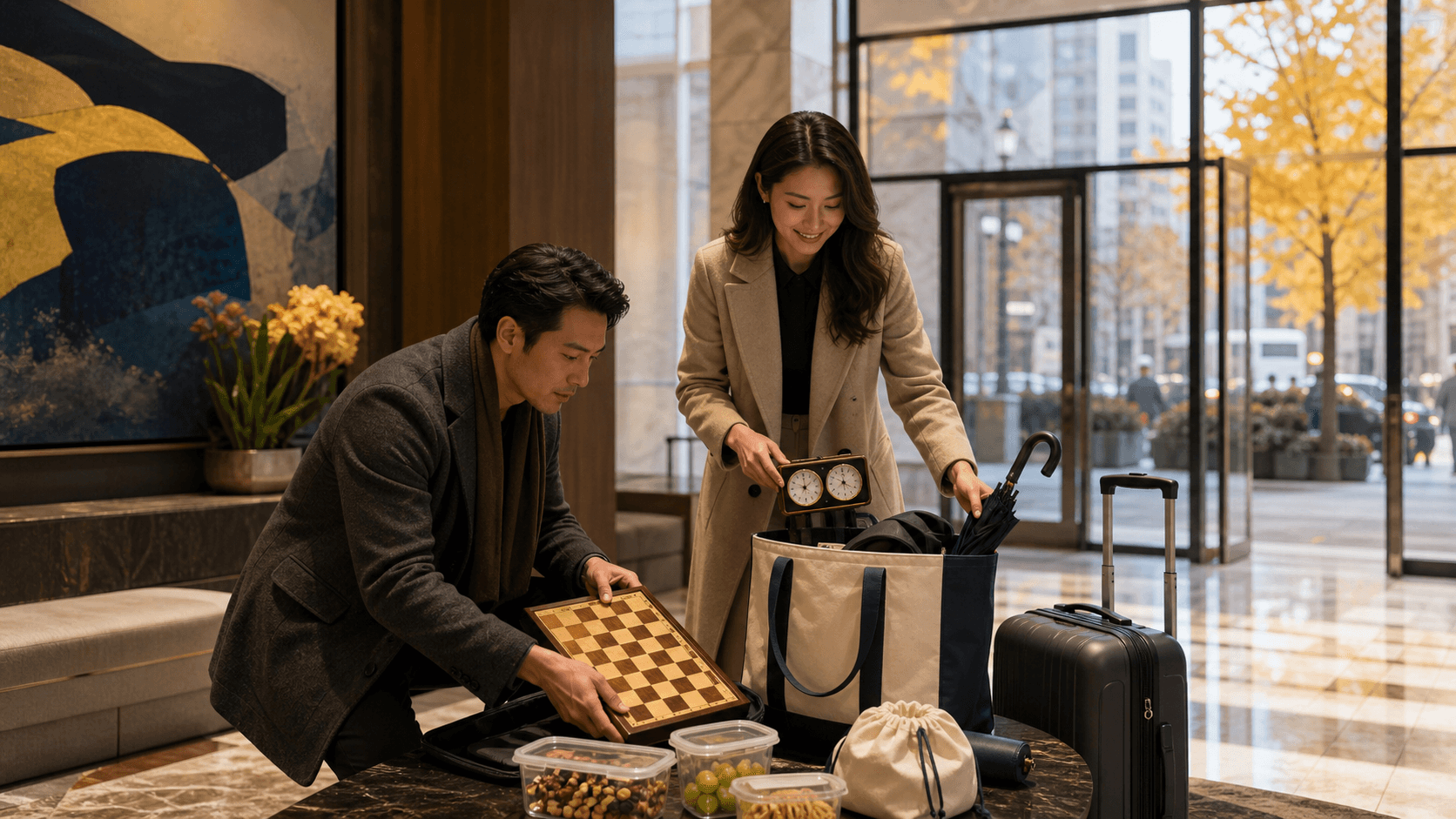
- A pre-packed tournament bag waits by the door: board if needed, scoresheets, pens, snacks, water, jacket.
- Travel plans are set in advance, including how to get home if a game goes long.
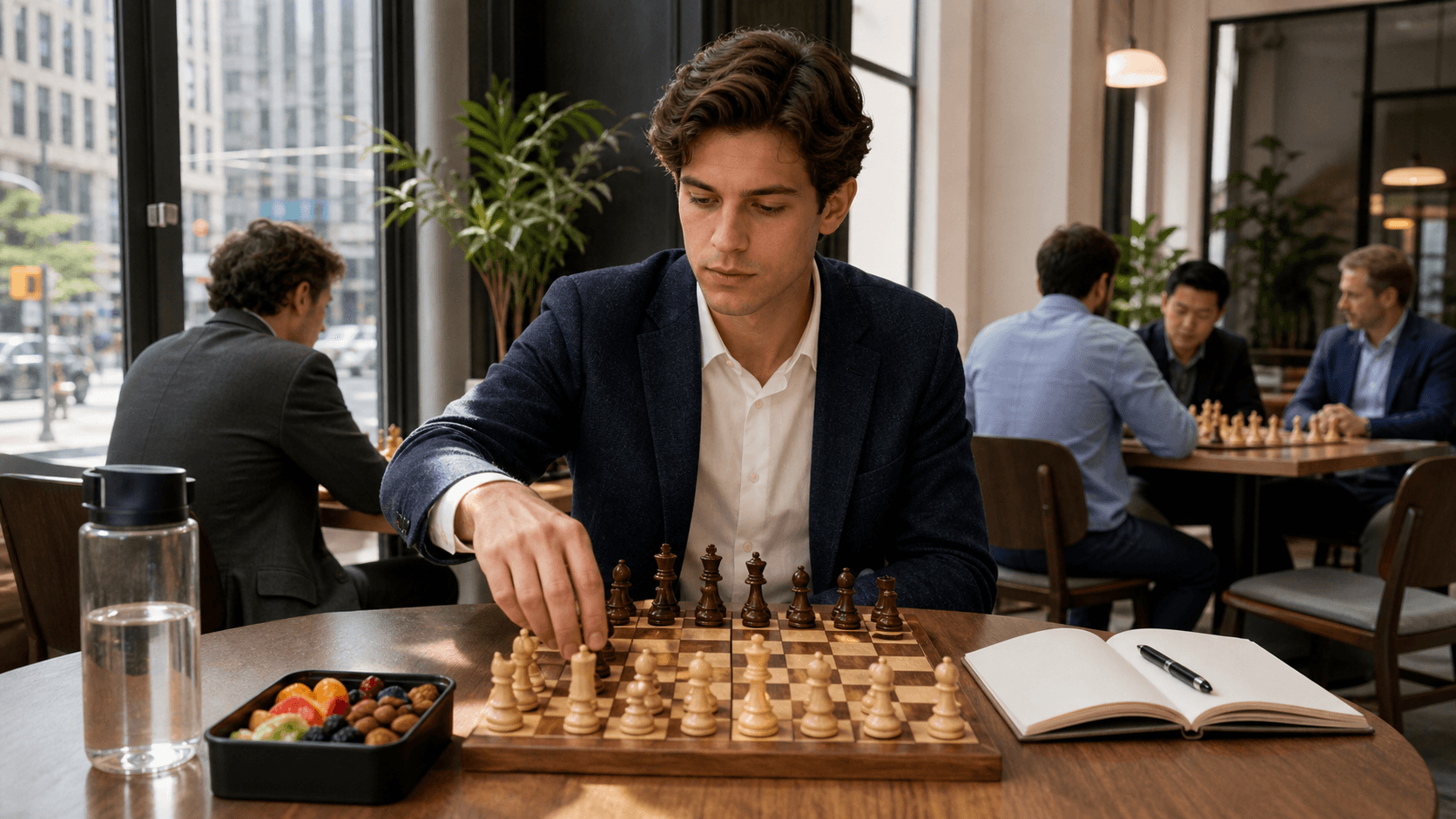
Adult students who work in Midtown or Downtown map out "office-to-club" routes. Some keep a small chess kit at the office so they can walk or take the subway straight to the event. Others plan a short stop at a cafe to reset between work calls and the first move.
This is also why we try to balance slow and fast time controls in our own classes. Long classical rounds help with deep calculation. Rapid and blitz tournaments match the quick-training segments we use to sharpen instincts and clock handling.
Tournament Routines That Mirror Class Training
The right game-day routine starts hours before round one. When kids go straight from school to Manhattan chess tournaments, a simple pattern makes a big difference:
- Snack and water right after school, with something easy to digest
- Ten minutes of tactics, similar to what we solve at the start of our lessons
- A calm arrival at the venue at least 15 to 20 minutes before start time
That short tactics warm-up keeps their calculation "on," but does not drain energy. We also like kids to sit at the board a few minutes early, get used to the chair, and write names on the scoresheet before clocks start.
For adults stepping out of work mode, a different reset works better. On the way to the tournament, many find it helpful to:
- Review 3 to 5 key opening lines that came up recently in class
- Solve a small set of tactical puzzles, even if it is only for five minutes
- Do a few slow breaths to drop the stress and noise from the workday
These small habits help you arrive at the board as a chess player, not as a stressed commuter.
There are also plenty of helpful public tournament series in the city. Events run by groups like Chess In The Schools often give players of different ages and levels a chance to compete under solid conditions. When our students play in those events, we encourage them to focus on current training themes instead of just the final score.
Right now, in class, some of the themes we emphasize are:
- Time management and avoiding time trouble
- Converting better positions without rushing
- Staying calm in must-win or last-round games
We ask students to pick one theme as a personal "mission" for each event. For example, "In this tournament I will focus on using at least 10 minutes before move 15" or "This time I will take a deep breath before every capture." That turns every tournament into live practice for what we are doing in lessons.
Using Fall Tournaments to Accelerate Rating Growth
Once school routines settle, fall is a strong season for steady growth. Homework patterns are clearer, work calendars are more predictable, and players who trained in summer camps or online intensives are ready to test what they learned.
To use that structure well, we like to match tournaments to what a player is studying. For example:
- Working on rook endgames? Choose events with longer time controls so there is enough time to reach and play the endgame carefully.
- Practicing attacking the king? Pick a rapid or blitz night and aim to get dynamic positions where attacks are common.
- Learning how to handle pressure? Sign up for a short Swiss where the final round often decides prizes or rating jumps.
Our online training options, such as online lessons with our coaches, make it easier to connect between tournaments. Students can go over games even if they cannot come in person between events.
The real rating progress usually comes after the event, not during it. A simple post-tournament system helps:
- Keep all scoresheets together in one folder or notebook.
- After the event, pick 3 to 5 key games, not all of them.
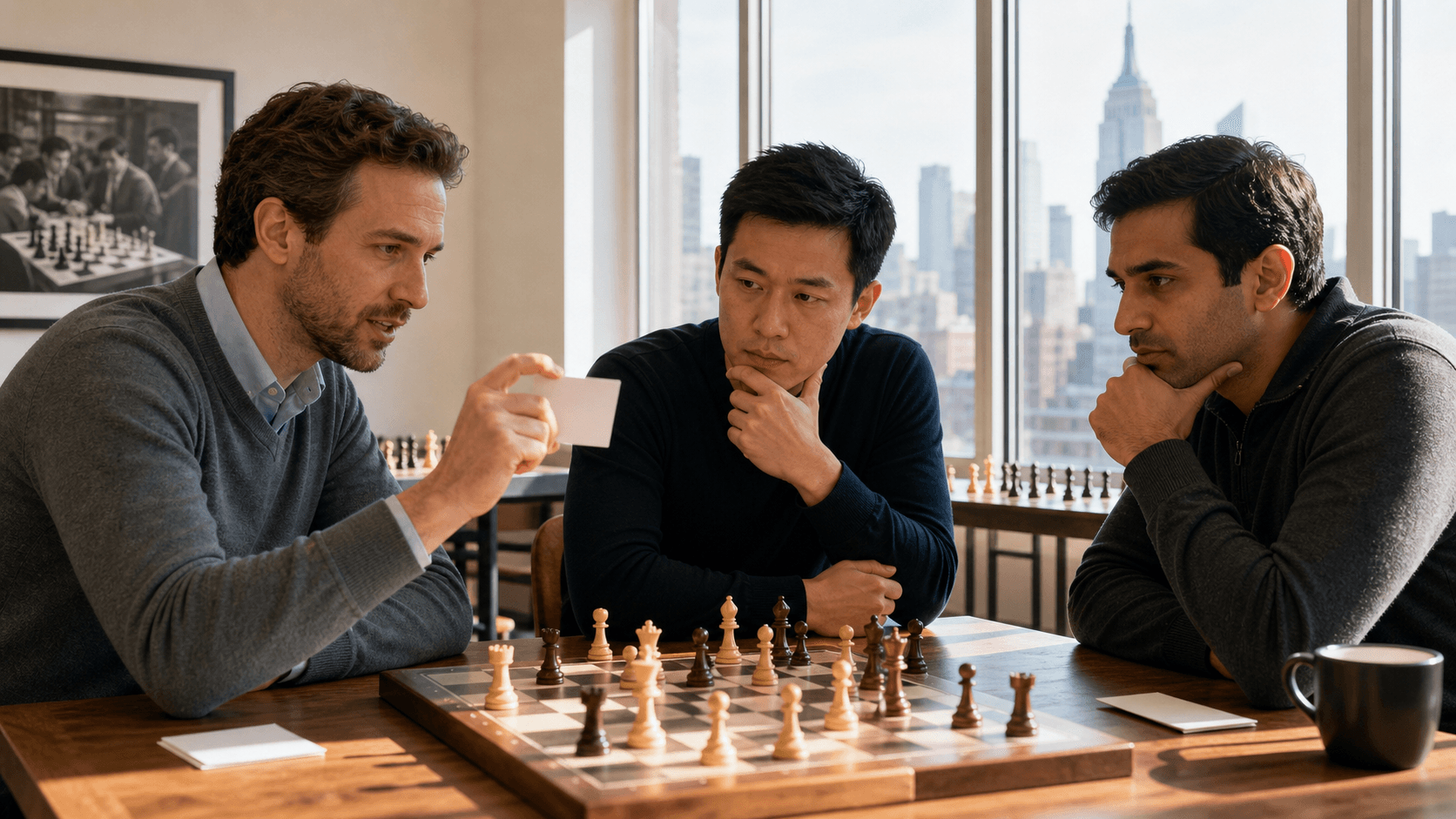
- Bring those games to the next class or lesson and review them with a coach.
We look for repeated patterns: openings that lead to trouble, time pressure habits, or endgame blind spots. That gives us a clear plan for the next few weeks of training, so every tournament pushes the player forward instead of just adding another number to a rating page.
If a student needs extra structured practice, some families will use our online options between events or sign up for seasonal programs like Central Park camp sessions when they are available, then carry those skills straight into the next tournament cycle.
Partnering with Coaches for Your Next Step
Staying active in Manhattan chess tournaments while keeping up with school and work is a long-term project, not a one-time fix. The families and adult students who improve steadily tend to treat their coaches as planning partners, not just tutors.
One practical habit is to bring a copy of your school or work calendar to a lesson. Together, you and your coach can:
- Mark one "anchor" tournament each month that matters most
- Add one or two smaller events as warm-ups or practice
- Block off days for rest, homework focus, or family events
We also see strong results when players line up extra support before key events. That can mean short private sessions to sharpen a specific opening, joining a tournament-prep group class for game simulations, or using online check-ins between rounds of a weekend event.
Over time, this kind of planning turns Manhattan chess tournaments from random stressful nights into a steady, thoughtful part of your growth. Your schedule stays busy, but it starts to feel organized, with each event connected to a training goal instead of just squeezed into free space on the calendar.
When tournaments, classes, and home routines all point in the same direction, players do not just play more games, they play better games. That is where rating gains, stronger confidence, and real progress begin.
Challenge Yourself At Our Next Manhattan Chess Tournament
Ready to test your skills against serious competitors in the heart of the city? Explore our upcoming Manhattan chess tournaments and find the perfect event for your level. At United States Chess Academy, we create a focused, supportive environment where players can grow, compete, and enjoy the game. If you have any questions or need help choosing the right section, feel free to contact us.