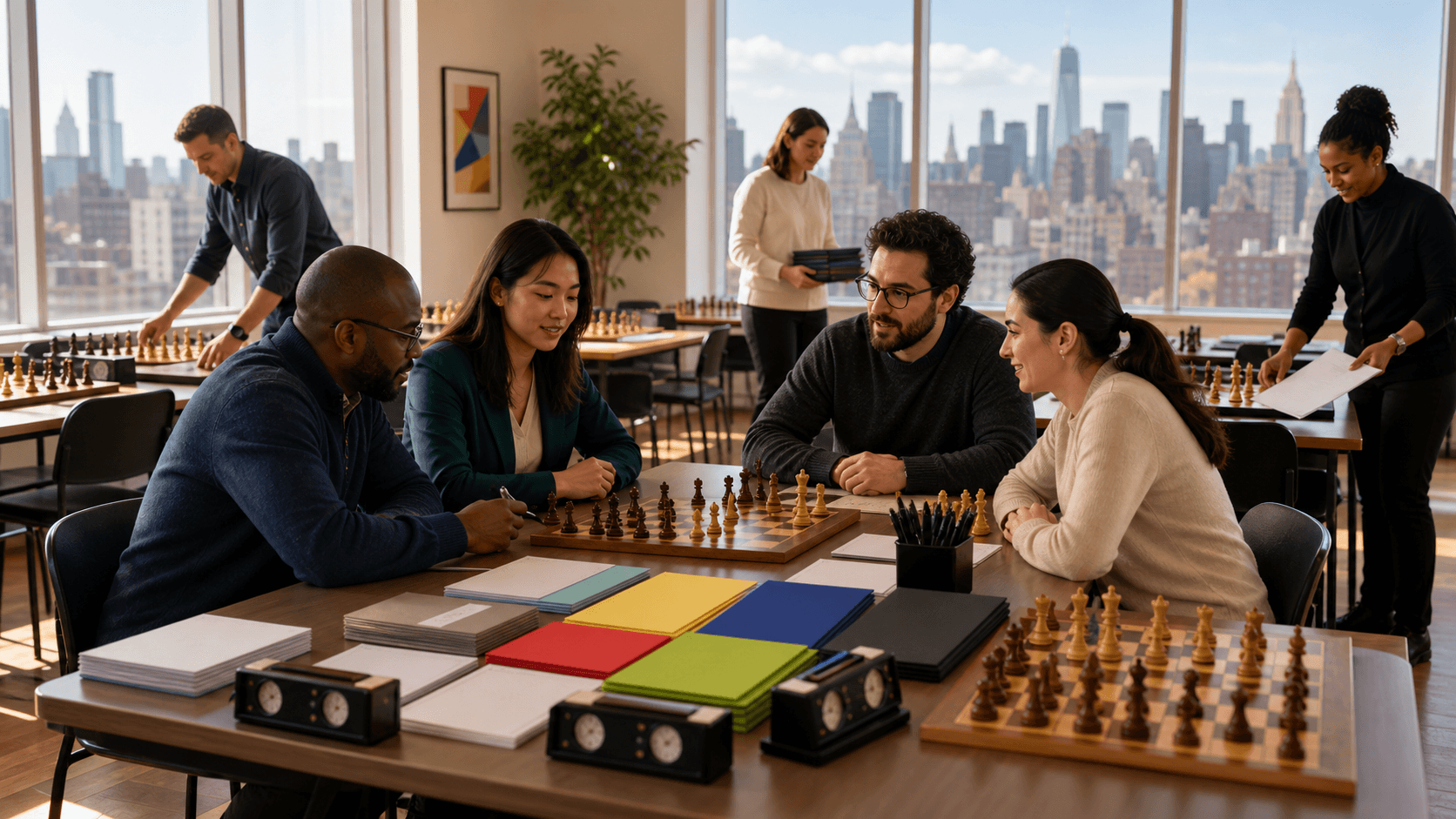
Turning School Breaks Into Chess Growth Windows
School breaks in Manhattan can feel like a pause button. Homework slows down, after-school activities stop, and kids suddenly have long stretches of free time. For young chess players, that gap can either slow progress or open a big window for growth.
Between terms is when kids can think deeply, play longer games, and try new ideas without the pressure of a school night routine. Youth chess tournaments in Manhattan during these breaks give that free time some structure. Events at places like Hunter and community programs such as the ones listed on Tournaments | Chess In The Schools help keep kids active in real games when school is out.
At our Manhattan academy, we use these breaks to connect our current class cycles, seasonal camps, and upcoming tournaments so they all point in the same direction. The goal is simple: keep kids engaged, steady, and ready to take that next step in understanding, confidence, and rating when school starts again.
Why Between-Term Tournaments Matter for Young Players
When kids stop playing tournaments for a while, they often feel rusty. Openings they knew last month suddenly look strange, and simple tactics slip by. That performance dip is normal, but regular events during school breaks smooth it out.
Between-term tournaments help kids:
- Keep their thinking sharp by playing full, rated games
- Stay confident instead of nervous about getting back into it
- See progress from their recent lessons in a real setting
Our classes are structured in levels, from beginners learning how the pieces move to players working toward stronger USCF results. When a student finishes a cycle of classes, a break tournament acts like a save point. Before they move to the next group, they get to:
- Use the new openings they just learned in the current cycle
- Apply fresh tactical ideas on the board
- Practice better time management and focus
There is also a big social piece. Kids form friendships in class, and breaks can feel strange when that routine disappears. Tournaments give them a familiar space where they:
- See the same coaches and classmates they know from their weekly groups
- Share wins and tough losses with peers who understand
- Spend unstructured time in a positive, screen light setting
For many families, that sense of community is just as important as rating points.
Designing Tournaments Around Real Family Schedules
Manhattan families juggle a lot: travel, other camps, school projects, and late-August back-to-school prep. When we plan youth chess tournaments in Manhattan between terms, we start with what is realistic for families, not what looks ideal on paper.
We think about:
- Popular travel weeks, especially around holidays
- Common camp dates so events do not clash with full-day programs
- How long kids can focus at different ages
From there, we mix different formats across the year, such as:
- One-day quads, so kids play three focused games against similar-rated players
- Half-day events for younger students or newer tournament players
- Weekend Swiss tournaments for kids getting ready for more serious USCF play
- Back-to-school warm-up events in late August to knock off the rust and connect directly to our fall class openings
Another key piece is flexibility. Parents need options that match where their child is right now, not where they might be next year. That means:
- Sections by rating and experience, so beginners are not thrown in with advanced players
- Single-day or single-event entries so families can work around travel
- Clear descriptions of each section so parents can choose with confidence
We know our tournaments are just one part of a family's schedule, so we design them to fit, not to take over.
Connecting Tournament Play to What We Teach in Class
Tournament results make the most sense when they connect back to training. We do not see events as isolated big days. We see them as part of a steady plan that links classes, private lessons, and even online work.
Our coaches plan class themes around upcoming events so families feel the same focus in class, in our newsletters, and at the board. For example, ahead of our late-August youth tune-up tournaments, our current classes focus on:
- Avoiding time trouble in longer games
- Handling nerves and staying calm after a blunder
- Simple opening setups that are easy to remember under pressure
As we move toward our winter tournament series, class themes and newsletter tips shift toward:
- Tactical calculation and pattern recognition
- Blunder-checking habits before every move
- Endgame basics that win or save half-points
Between terms, some families also like flexible learning from home. Our online lessons help kids stay connected to their coach, even if they are traveling, and prepare for the next tournament on our calendar that they will return to in Manhattan.
After every tournament, the real learning starts. We encourage students to bring their scoresheets to the next class or lesson so we can:
- Review key positions together
- Spot recurring habits, good and bad
- Turn tough losses into clear action steps that guide the next few lessons
That way, each event becomes a learning lab that shapes what we teach next and what we highlight in our class updates and newsletters.
From Camps to Competitive Confidence Between Terms
School-break chess camps and tournaments fit together naturally. Camps give kids daily structure and focused training. Tournaments at the end of the week or right after the camp give them a chance to test everything right away.
A typical break camp rhythm at our academy might look like:
- Morning lessons on themes, like openings, tactics, or endgames that match our current class focus
- Midday practice games with guidance from coaches
- Optional rated events or tournament-style rounds in the afternoons
Outdoor options, like our Central Park chess camp, also help younger kids balance serious thinking with movement and fresh air. When those kids head into a weekend event tied to that camp, they feel fresh instead of drained.
Camps act as a bridge between class cycles. Kids can:
- Try new openings in a low-pressure setting before they use them in our scheduled break tournaments
- Sharpen tactics through daily drills
- Build stamina for longer games
Parents sometimes worry that camps or tournaments might feel too intense or too advanced. To keep things comfortable, we:
- Sort groups by experience and age as needed
- Use simple formats for newer players
- Offer more challenging sections only when a child is clearly ready
That way, beginners and ambitious players can share the same overall structure while still getting the right level of challenge.
Supporting Parents Through the Tournament Experience
Parents do a lot of silent work in the background: packing snacks, getting kids to the site on time, and managing big emotions on the ride home. We try to support that role as clearly and calmly as we can.
Before events, we give clear guidance on basics like:
- What to pack, from water to a light sweater
- When to arrive so kids are settled before round one
- How pairings and sections work in simple language
Organizations across the city, such as Hunter events and other youth tournaments, often post helpful instructions as well, and we aim to keep our information just as clear and consistent with what families see in our newsletters.
During tournaments, families can talk with our staff and titled coaches about:
- Rating questions and how the system works
- Whether their child is in the right section
- Which class or group might be the best next step in the current or upcoming term
We also know parents care about what results really mean. A single bad day does not define a child, and a single trophy does not close the book. In our newsletters and class updates, we highlight:
- Examples of steady progress, not just first-place finishes
- When a child might be ready to move up a section
- Upcoming events and programs that match where their child is in their learning curve
For practical planning, many families like being able to register smoothly when they are ready. Our online registration makes it simple to line up classes, camps, and selected tournaments all at once, following the same schedule we share in class and in our emails.
Planning Your Child's Next Tournament Season
The most effective tournament schedule is rarely every event possible. It is usually a calm, realistic plan that fits around school, family time, and your child's energy level.
Parents can start by thinking in three parts, using the same structure we share in our seasonal planning guides:
- Regular weekly classes for steady skill-building
- Selected camps during school breaks for focused training
- A handful of youth chess tournaments in Manhattan between terms to tie it all together
When those pieces line up, each event feels intentional. A camp leads into a weekend tournament. A between-term event confirms that a child is ready for a new class level. A late-August warm-up makes the first school-year tournament feel familiar instead of scary.
As we update our class schedules, camps, and tournament calendar, each season, we design our blog posts and newsletters to mirror what families are actually signing up for right now. Over time, this steady rhythm helps kids see chess not as a series of random big days, but as a clear path toward stronger, more confident play. Families can then enjoy watching their children grow, one thoughtful move and one well-timed tournament at a time.
Help Your Child Gain Confidence Through Competitive Chess
If your child is ready to take the next step beyond casual play, explore our structured youth chess tournaments in Manhattan designed for developing players. At United States Chess Academy, we create a supportive, professional environment where students can test their skills, learn from real game experience, and grow strategically. Have questions about which section or event is right for your child? Simply contact us and we will help you get started.