Turn Tournament Nerves Into a Game-Day Edge
Those last 10 minutes before round one at a youth chess tournament in Manhattan can feel intense. The hall is loud, pairings just went up, parents are trying to find the right section, and kids are wondering who they will play. In that rush, many players sit down at the board with their hearts racing and their minds not fully awake.
We want those same 10 minutes to feel different for your child. Instead of panic, they can feel prepared and steady. Instead of random last-minute advice, they can follow a simple warm-up they already know from class. In this article, we will walk through a 10-minute pre-round routine built straight from the drills we run in our lessons, camps, and tournament prep clinics: breathing, visualization, tactical motifs, and quick opening recall.
The goal is not to learn anything new right before the round. The goal is to turn what we practice every week into a calm, repeatable game day ritual.
Why a 10-Minute Routine Wins More Games
When players do the same short routine before every round, something important happens. Their brain gets a signal: "I know what to do. I've been here before." That feeling of "I've done this" lowers anxiety, keeps hands from shaking on move one, and cuts down on the early blunders that ruin good tournaments.
Kids do not need a big science lesson to understand why this works. They just need a few simple ideas:
- Calm breathing helps the brain focus
- Clear pictures in your head make moves easier to find
- Warmed-up eyes spot tactics faster
- A simple opening plan stops panic in the first 10 moves
This is exactly what we aim for in our structured improvement plans at our Manhattan school. When we talk about tournament readiness, we are not only talking about knowing your openings or endgames. We are talking about having a routine you can trust, whether you are playing at a local school tournament, a Hunter event, or a large Manhattan weekend Swiss.
Our coaches model this same kind of prep at our classes, camps, and youth events, so when kids use this routine at other tournaments, it feels like an extension of what we already do together.
Two-Minute Breathing Reset for Busy Tournament Halls
Step one is simple: two minutes of slow, steady breathing. This is the same "box breathing" we practice in class.
Here is how kids can do it while standing in a hallway or sitting in a chair:
- Breathe in through the nose for a slow count of 4
- Hold the breath for 4
- Breathe out through the mouth for 4
- Pause with your lungs empty for 4
Repeat this pattern for about two minutes. Players can close their eyes or keep them soft and slightly down. What matters is attention.
While breathing, we tell students to:
- Feel both feet on the ground
- Sit or stand tall, with relaxed shoulders
- Let go of the last round, good or bad
- Ignore pairings, ratings, and standings for a moment
Parents can help without coaching the chess. They can:
- Help the child find a quieter corner or hallway spot
- Watch the time so the player is not late
- Gently remind, "Start your two-minute breathing now"
Once those two minutes are done, the heart rate is lower and the brain is less noisy. Now the player is ready for a mental warmup, not mental chaos.
Three-Minute Visualization of a Strong Start
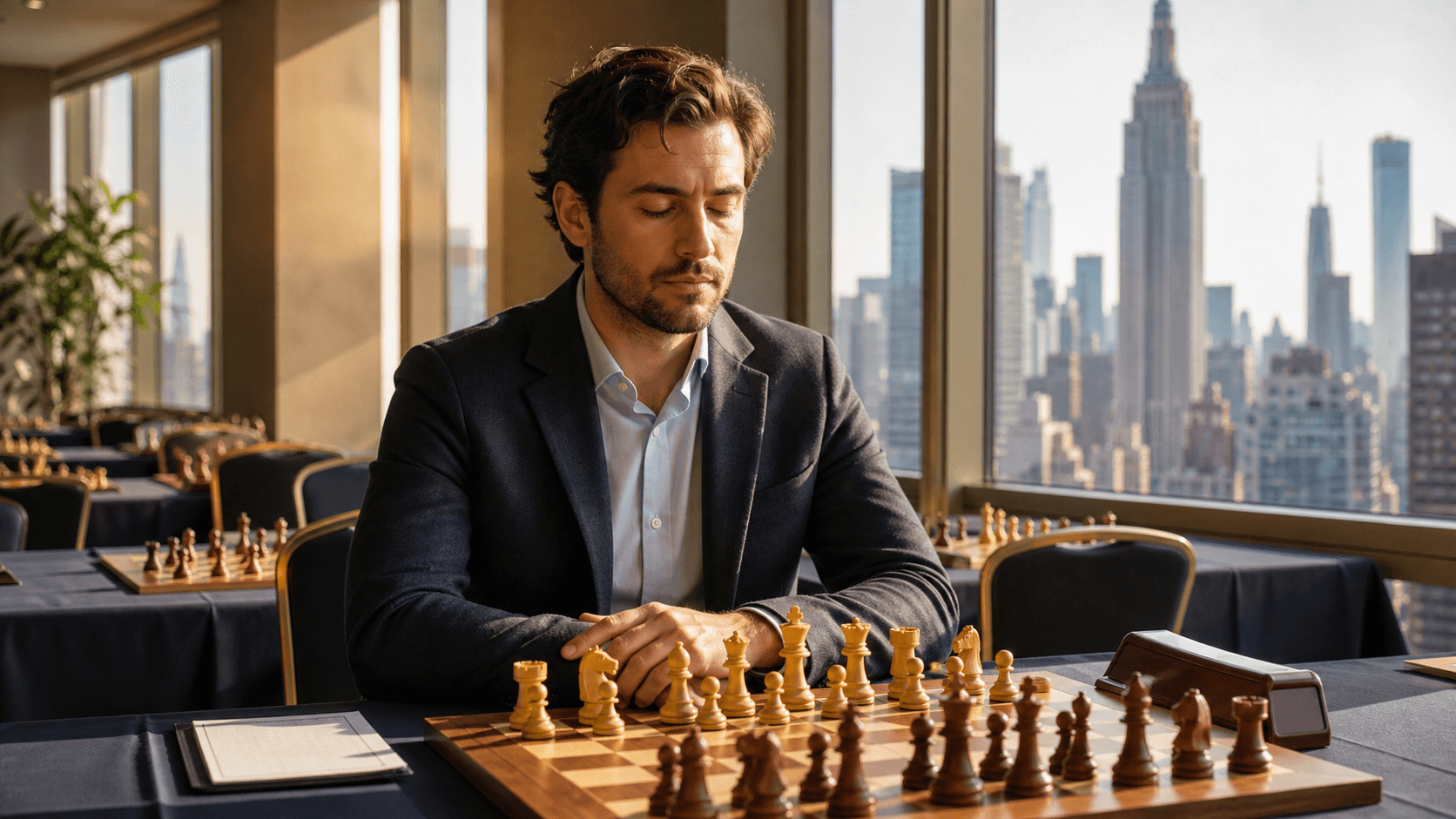
Next comes three minutes of visualization, which we already practice in many of our group lessons and camps. This is not anything mystical. It is just using the mind's eye to "rehearse" the start of the game.
We ask students to close their eyes and quietly run through:
- Sitting at the board with a straight back and relaxed shoulders
- Shaking hands politely or nodding to their opponent
- Playing the first three moves of a favorite opening
- Pressing the clock calmly with a steady hand
We also add performance cues that our coaches repeat again and again:
- See yourself checking for hanging pieces before every move
- See yourself pausing to breathe if you feel rushed
- See yourself writing moves clearly on the scoresheet, just like in practice games
This kind of mental rehearsal is simple, but powerful. When a child has already "seen" themselves start a game calmly several times in their mind, it is easier to act that way when the real round begins.
We keep reinforcing these small visualization drills in our fall group classes, weekend tournament prep, and even during some of our Central Park camp activities, so this step becomes second nature.
Three-Minute Tactical Motif Sprint From Class Drills
Now the brain is calmer and more focused. Time to wake up the tactical patterns that win games. For three minutes, kids do a "tactic sprint" made of positions they already know from class.
We like to keep it to three motifs that appear constantly in youth chess tournaments in Manhattan:
- Pins
- Double attacks (forks)
- Basic checkmates
Here is a simple way to structure those three minutes:
- 1 minute of pin puzzles
- 1 minute of double attack puzzles
- 1 minute of mate-in-1 or mate-in-2 positions
These can come from:
- Printed puzzle sheets from class or camp
- Positions saved in a phone gallery that parents show before kids enter the hall
- Online puzzles from the same platforms we use for homework and online lessons
The key is speed and familiarity, not difficulty. We are not trying to solve the hardest puzzle in the world before the round. We are just turning on pattern recognition so that when a pin or fork appears in the game, the player's brain says, "I know this."
We talk a lot in class about how many games at local events, including big Manhattan tournaments, are decided by simple tactics. Training these patterns daily, then quickly reviewing them before the round, makes it more likely that students will actually spot them at the board.
Two-Minute Opening Recall That Matches Class Prep
The last "chess" part of the routine is two minutes of opening recall. Notice we say recall, not memorization. We want players to think in ideas, not long, fragile move orders.
In these two minutes, they review:
- One main opening with White
- One main opening with Black
These should match what we have already built in their level group, whether they are in our beginner, intermediate, or advanced classes. We keep it very simple:
- How do I develop my pieces quickly?
- How do I keep my king safe?
- What early tricks or traps do our coaches warn about here?
- Where do my pieces usually belong in this opening?
We remind students that in most youth events, including school tournaments and weekend events around Manhattan, pairings come fast and halls are noisy. Opponents might play strange moves or sideline systems. If a player focuses on solid ideas instead of 20 exact moves, they are less likely to panic when the position looks a little different than their homework file.
This is also an area we tie into our homework, class sparring games, and even how we set up teaching positions in our registration-based classes and camps. The more often kids explain their opening ideas out loud in a calm classroom, the easier it is to recall those same ideas in a noisy playing hall.
Putting It All Together at Your Next Manhattan Event
Here is how the full 10-minute toolkit looks when you put it in order:
- Minutes 0 to 2: Breathing reset
- Minutes 2 to 5: Visualization of a strong, calm start
- Minutes 5 to 8: Tactical motif sprint (pins, double attacks, mates)
- Minutes 8 to 10: Opening recall, one main line with each color
After that, kids should walk to the board at a normal pace, not running, not dragging their feet. When they sit down, they have already "started" their game in their mind. They have already taken their first breaths, seen their first moves, and spotted a few tactics.
To make this work in real life, families can plan to arrive 15 to 20 minutes early to weekend tournaments around Manhattan, whether they are at a local school, at a community center, or at our own events. That small buffer time protects the warm-up from traffic surprises, registration lines, and last-minute snack runs.
The most important part is consistency. When kids follow the same simple routine at every event, from a small school tournament to a large open in the city, they build a steady game day habit that will serve them for many seasons of play.
Help Your Young Player Compete With Confidence
Give your child the chance to test their skills and grow through real tournament experience with our structured youth chess tournaments in Manhattan. At United States Chess Academy, we create a supportive environment where students can learn to handle competition, focus under pressure, and enjoy the game. If you have questions about which event is the best fit for your player, please contact us. Let us help your young chess enthusiast take the next step in their competitive journey.