How Local Tournaments Shape Confident Young Players
Elementary chess tournaments in Manhattan are loud, bright, and full of energy. Kids lay out boards, clocks start to beep, and parents hover on the edges with coffee and nervous smiles. It looks like simple weekend fun, but a lot more is happening at those boards than rating changes.
At United States Chess Academy, we see these events as live classrooms. The skills students practice with us all week show up over the board on Saturday: focus, patience, flexible thinking, and good manners under pressure. With a new school year starting and so many elementary chess tournaments in Manhattan on the calendar, it is a perfect time to think about what your child is really learning when they sit down for that first round.
We want to walk through how tournament days connect to what we do in our classes, and why ratings are only one tiny part of the story. Whether your child plays at their school, at local events like Hunter tournaments, or at weekend scholastics across the city, these experiences can help them grow in ways that reach far past the board.
Turning Opening Prep Into Real-World Problem Solving
In class, opening lessons can feel calm and clean. The room is quiet, the position is on a demo board, and everyone has time to ask questions. Then your child sits down at a real board in a crowded gym, starts their favorite opening, and suddenly their opponent plays a move they have never seen.
This is where our focus on ideas, not just memorized lines, really matters. We spend a lot of time on core opening principles like:
- Developing all your pieces
- Keeping your king safe
- Fighting for the center
- Not grabbing random pawns early
When kids understand these ideas, they can handle surprises. Instead of freezing because they forgot the next move, they think, "How do I stay safe and active here?" That simple shift turns panic into problem solving.
Between rounds, and back in our regular classes, we go over tournament games together. We do not only point at blunders. We ask questions like:
- What did you notice during the opening?
- Where did you feel unsure?
- Did you follow your plan or just copy moves?
This turns each game into a lesson about decisions. Over time, that habit of reviewing choices helps with schoolwork too. Kids get used to checking their thinking, not just their final score. For many families, online lessons are another way to keep this analysis going. Our students often upload weekend games to talk through in online coaching sessions, while the experience is still fresh in their minds.
Managing Nerves, Setbacks, and Big Emotions Over the Board
The emotional side of chess is very real, especially for younger players. Before round one, kids feel excited and a little shaky. After a quick loss, shoulders drop and tears might appear. Before a final round, some children feel like the whole day depends on one result.
In our classes, mindset is not an extra. It is a core part of training. We practice simple tools that kids can use at events:
- A short breathing routine before the game
- A small "start of game" checklist: sit up, reset the pieces, check the clock
- Reminding themselves that losing is normal and helps them learn
We talk a lot about how even grandmasters lose games and still get up to play the next round. When kids understand that mistakes are part of growth, they bounce back faster. Parents start to see changes like:
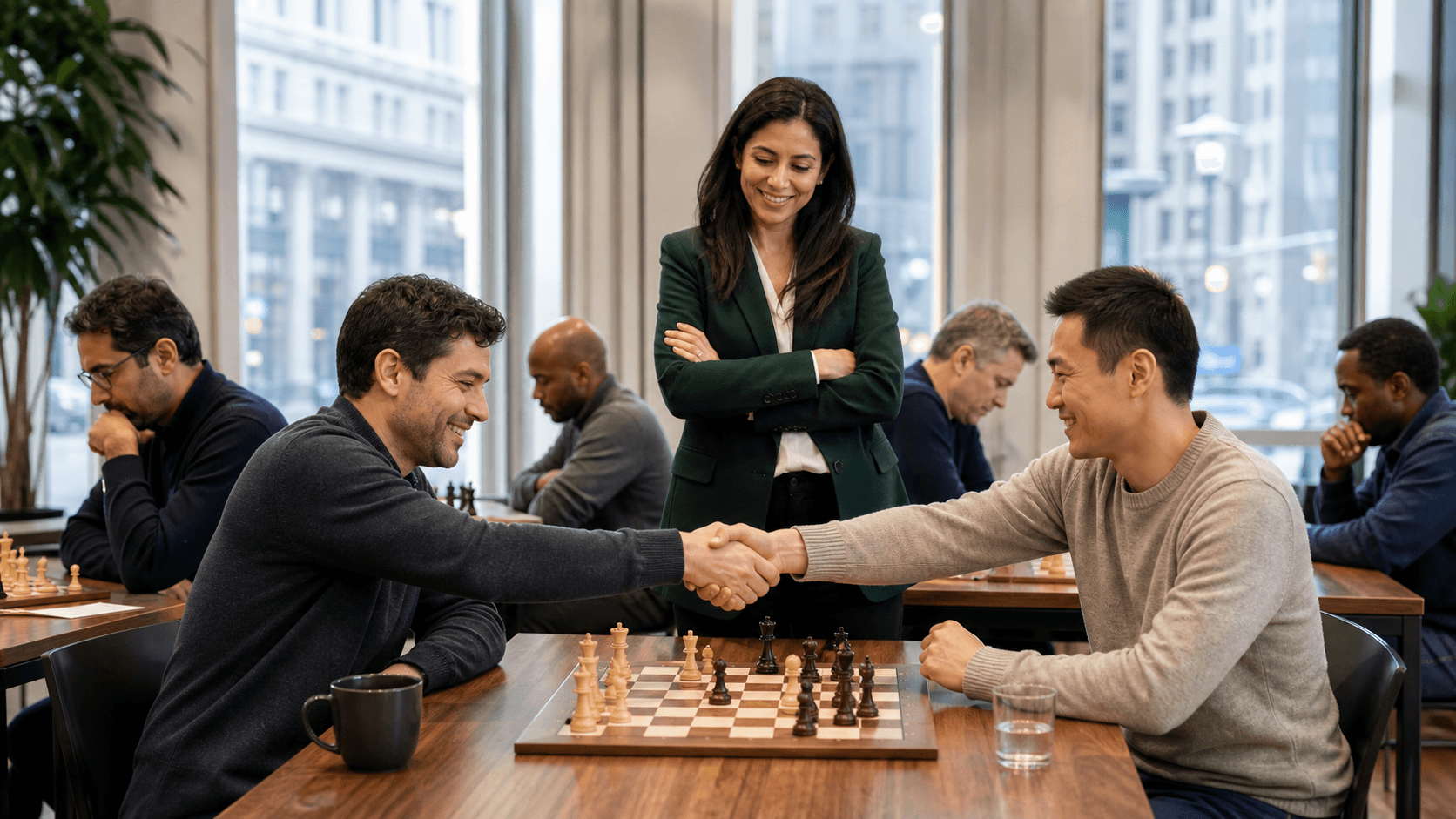
- Kids shaking hands politely, even after a hard loss
- Choosing to keep playing the rest of the event instead of wanting to go home
- Talking through what happened in the game instead of having a meltdown
We also connect mindset work to real upcoming tournaments. Before major local weekends, we run focused sessions where we role-play tough moments: blundering a piece, getting a tricky pairing, or needing a win in the last round. Practicing those feelings in a safe space helps children handle them better when it counts.
Learning Teamwork in a Traditionally Solo Game
From the outside, chess looks like a totally solo sport. But many elementary chess tournaments in Manhattan include team standings and school prizes, so kids are suddenly playing for each other as well as themselves. Events hosted by schools across the city, like Hunter and others, often feel like mini team competitions, with groups cheering at the posted standings and comparing boards between rounds.
This team setting fits naturally with what we do in our group classes. Students are used to:
- Analyzing positions together
- Sharing opening ideas with friends
- Rooting for classmates in training games
At tournaments, that teamwork shows up in small but powerful ways. Between rounds, kids huddle over score sheets and go through games together. Older students give quick advice on time management or staying calm in noisy halls. A child who just lost can still feel proud if their team is doing well overall.
Many Manhattan schools take chess culture seriously. Programs like the one featured in Dalton's chess life show how a strong school community can grow around this "individual" game. We see the same spirit when our students wear their school shirts or academy gear, take photos together, and cheer when a teammate plays a long, tough game.
We highlight this team feeling in our own programs as well. When we share updates from recent events or from activities like our Central Park camp sessions, we do not only list winners. We talk about effort, sportsmanship, and the small acts of support students show each other, so kids learn that being a good teammate matters as much as being a strong player.
Building Long-Term Grit, Not Just Short-Term Ratings
Online ratings change quickly. A child can win a few fast games and feel like a star, then lose three in a row that same night. Over-the-board events move slower, and that is part of their power.
When a student plays regular elementary chess tournaments in Manhattan throughout the school year, we get a different kind of feedback. We look for signs like:
- Better quality of moves, even in losses
- Staying focused during long rounds instead of rushing
- Using time more wisely instead of blitzing out the first idea
- Handling pairings and results with more calm and maturity
Parents sometimes tell us, "Their rating hardly changed, but they looked so steady all day." That steadiness is grit. It is the ability to sit for hours, think through problems, and keep going after setbacks.
We plan our training around this long-term growth. For example, a fall cycle might focus on basic fundamentals and simple tournament habits, while winter sessions lean into deeper strategy and preparation for tougher events. When children play in several connected events, progress starts to show in their behavior, not just their numbers.
Families who stick with this pattern see how each tournament becomes part of a bigger story. Even at fun events or during relaxed seasons, some parents will add extra camps from our current program offerings to keep that rhythm going. Across months, kids learn how to set realistic goals, work toward them, handle disappointment, and try again. That mindset carries into school, sports, and any challenge that demands patience.
Getting Your Child Ready for Their Next Manhattan Event
If your child is thinking about playing their first or next event, it helps to keep things simple and connected to what they already do in class. A few clear steps can make tournaments feel like a natural extension of their weekly lessons, not a scary test.
Before choosing an event, it is useful to:
- Look at upcoming scholastic tournaments in Manhattan that match your child's age
- Ask their coach which section fits their current level
- Talk with your child about what they want to learn from the experience
You can then use current class themes as a prep checklist. If lessons have focused on openings, review basic development. If you have been working on endgames, set up a few simple king and pawn positions to practice. If mindset has been a big topic, remind your child of their breathing routine or game-day habits.
Most of all, it helps to shape how your family talks about results. Instead of asking "How many points did you score?" first, try questions like:
- Did you feel focused during your games?
- Did you stick to your opening plan?
- How did you handle it when something went wrong?
Over time, this way of thinking teaches kids that elementary chess tournaments in Manhattan are training grounds, not final exams. The more they see events at schools, academies, and local clubs as chances to test what they are learning in class, the more confident and curious they become. Ratings will rise and fall, but the real win is a child who walks into a crowded playing-hall feeling prepared, respectful, and ready to think hard from the first move to the last.
Help Your Young Player Compete With Confidence
If your child is ready to put their skills to the test, our elementary chess tournaments in Manhattan provide a structured, supportive environment to grow. At United States Chess Academy, we focus on age-appropriate pairings, clear rules, and positive coaching so every student can learn from each game. We welcome both first-time competitors and experienced young players. Have questions about which event is right for your child? Simply contact us and we will help you get started.