Turning Classroom Middlegames Into Real-Board Wins
Strong middlegame chess is often the difference between a draw and a win, or a great position that suddenly slips away. For many students, what they learn in class feels clear on the demo board, then seems to vanish once the clock is running in a real USCF game. Closing that gap is exactly what we work on every week.
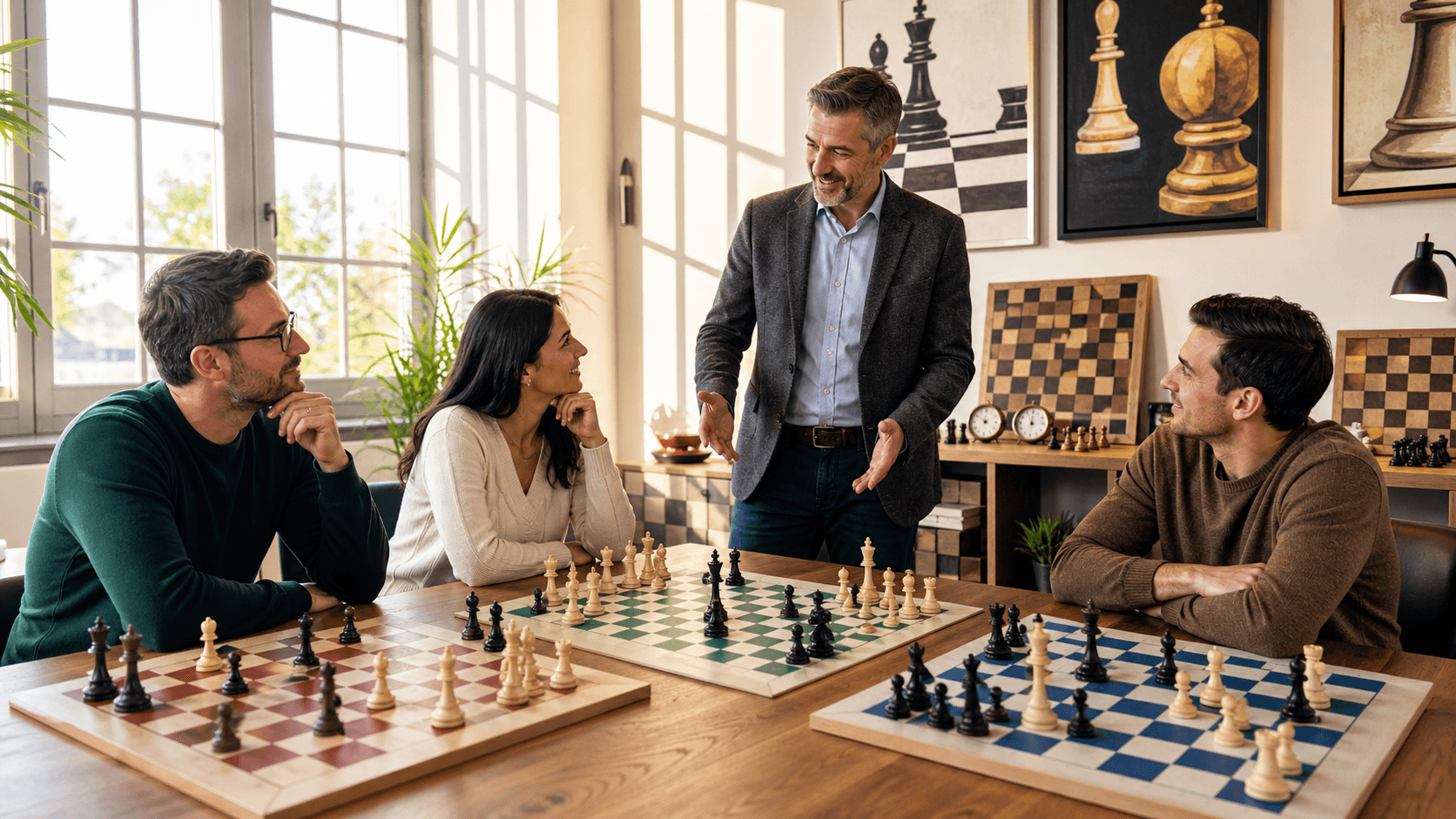
As fall routines settle in across Manhattan and beyond, our classes are built around one promise: the middlegame ideas students practice with us should show up on their scoresheets at weekend tournaments like local scholastic events, Hunter tournaments, and our own USCF-rated events. Group lessons, private coaching, and online sessions are all planned so the same themes repeat in different ways. Parents can see when this is working, not just by rating changes, but by hearing their child explain, in simple words, why they chose a plan in the middle of a real game.
We want families to notice things like:
- A child pointing to a scoresheet and saying, "Here I improved my worst piece first."
- Fewer random attacks and more patient building moves.
- Clearer post-game talks, even after a loss, about plans instead of "I just forgot what to do."
That is how classroom middlegames turn into real-board wins over time.
How Our Fall Classes Build Middlegame Confidence
As summer camps wrap up and school schedules return, our focus shifts from wide-open tactical fun to more structured middlegame planning. Openings still matter, but we treat them as a way to reach good middlegame positions where students know what to do next.
In our fall classes, we spend a lot of time on:
- Planning: what to aim for once pieces are developed
- Piece coordination: getting all the pieces to work together
- Typical middlegame patterns: weak squares, open files, and king safety
We regularly bring in real games from recent Academy events, local Manhattan tournaments, and other scholastic competitions. When a student sees a position that started from a game they played or watched, the lesson lands in a different way. It is not just theory, it is "this is what actually happens on Saturday."
The content is layered by level:
- Newer players work on recognizing good and bad pieces, simple trades, and not rushing pawns in front of their king.
- Intermediate players learn about pawn breaks, open files for rooks, and fighting for key central squares.
- Advanced students study dynamic imbalances, when to change the pawn structure on purpose, and how to use space or initiative as a long-term weapon.
Our in-person classes in Manhattan and our online lessons follow the same theme schedule. If a student learns about open files in the classroom, they will see homework, online positions, and tournament analysis built around that same idea. This repetition makes middlegame chess feel stable and predictable, not random and scary.
From Classroom Diagram to Tournament Pressure
Everyone plays better on the demo board. There is no clock, no noise from the next table, no rating on the line. The real test of middlegame chess is what happens when your child is down to five minutes, the position is messy, and the stakes feel high.
To help with that, we use training methods that copy tournament pressure while still keeping a safe learning space:
- Timed middlegame exercises where students must choose a plan in 2 or 3 minutes
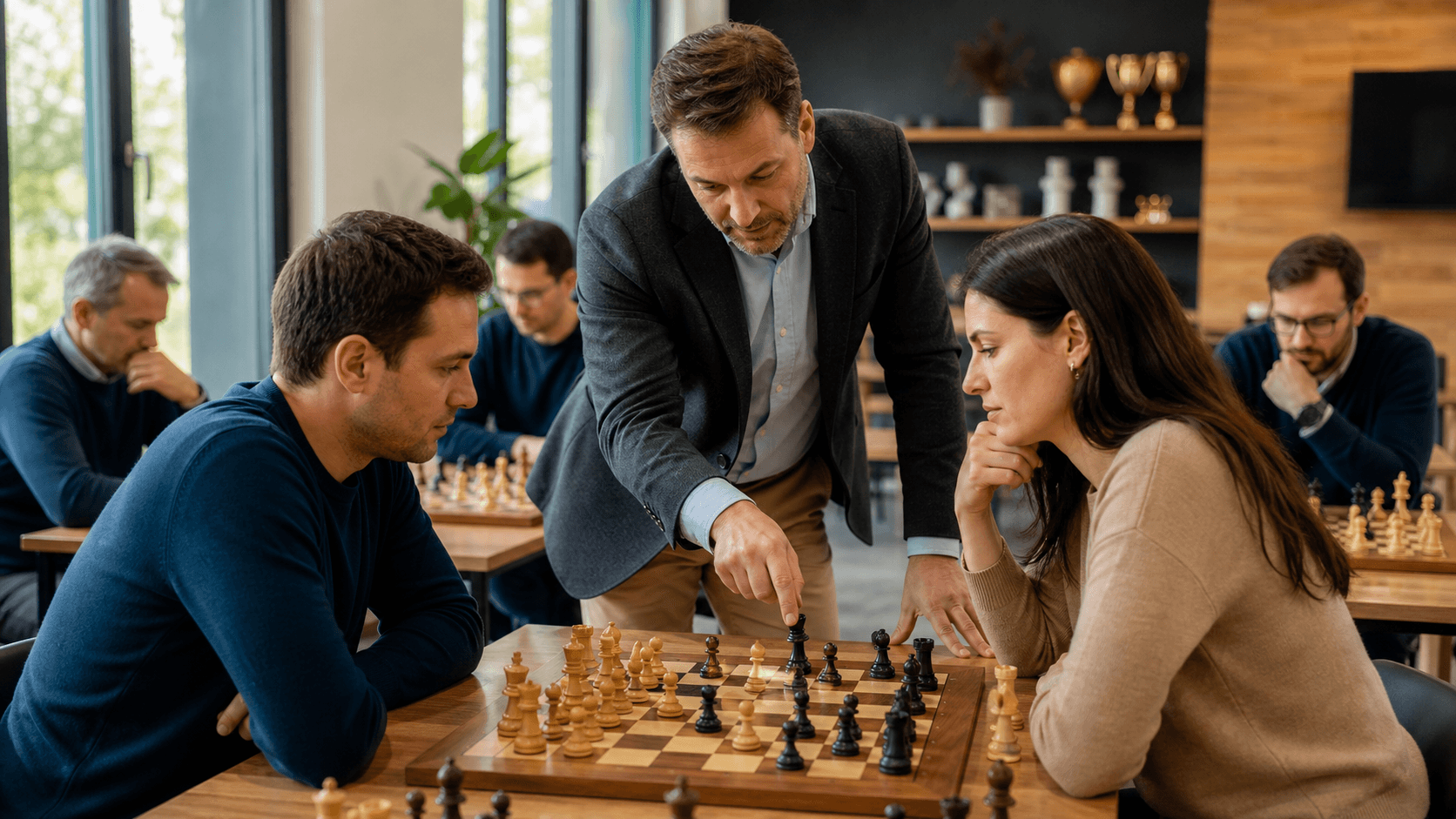
- Mock tournament rounds in class with clocks, scoresheets, and touch-move rules
- "Critical moment" drills, where we pause a real game and ask, "What are your candidate moves and why?"
We also teach simple decision tools that students can remember even when they are nervous. For example:
- A short checklist: king safety, material, piece activity, pawn structure, threats
- Limiting themselves to three serious candidate moves before they start calculating
- Saying their plan in one sentence before they move, even if only in their head
These habits give students a way to think when their feelings want to rush. We time this kind of training to build up before big scholastic events in the city calendar and our own USCF-rated tournaments, so that by the time they sit down to play, the pressure feels familiar. The goal is not to remove nerves, but to give students tools to play good middlegame chess anyway.
Middlegame Chess Themes You Will See in Upcoming Events
Each season, our coaching team studies recent tournament games from Academy students and other local events. We look for patterns: where do games go wrong, and what middlegame themes keep repeating? Then we choose a small set of focus topics so that the curriculum is aimed straight at those real mistakes.
Right now, we are putting special attention on:
- Exploiting open files instead of ignoring them
- Exchanging the right pieces, not just trading randomly
- Launching safe kingside attacks after completing development
- Recognizing when to stop attacking and improve the worst piece
These themes show up across different kinds of programming. For example, a student might:
- Learn about open files in class
- Play a themed practice event where every game starts from a position with heavy-file pressure
- Review tournament games with a coach, circling each rook move that either used or missed an open file
Parents can use a simple checklist with scoresheets after any weekend event, whether it is at our Academy, Hunter, or another Manhattan tournament:
- Did my child castle before starting an attack?
- Did they double rooks or a rook and queen on an open file?
- Were their trades planned, or did they just swap pieces without a clear reason?
- When they talked about the game, did they mention a plan, not just single moves?
If you hear them say things like "I traded my bad bishop for their good knight" or "I opened the g-file against their king," you are hearing middlegame concepts from class show up in real life.
Partnering with Coaches to Turn Lessons Into Ratings
The families who get the most out of middlegame training are the ones who treat coaches as teammates. Instead of focusing only on final results, they bring questions, games, and patterns they notice at home.
Helpful ways to partner with coaches include:
- Sharing recent USCF games, especially tough losses in the middlegame
- Noting time-trouble habits, like always being low on time by move 25
- Asking specific questions, such as "We keep losing positions with an isolated pawn, can we work on that?"
Private lessons and small group sessions are great places to dig deeper into tricky middlegame problems. Some students struggle in cramped positions where they feel stuck. Others have trouble when they have more space, because they rush pawn pushes and weaken their king. We aim at those patterns directly with targeted examples and training positions.
We also lean on routines that connect classroom work to performance:
- Annotated game reviews so students see where their plan changed or drifted
- Online homework positions that repeat themes they missed over the board
- Post-tournament feedback sessions that look at quality of play, not just rating changes
Often, progress in middlegame chess shows up first as cleaner games: fewer wild blunders, better exchanges, and more logical plans, even if the rating stays flat for a while. Our job is to help students and parents see and value that quiet progress, so they stay confident enough to keep going.
Turn This Season's Training Into Your Next Tournament Breakthrough
The best way to use all this work is to see every upcoming event as a kind of "middlegame lab." Whether your child is playing at an Academy event, a school tournament, or a big city scholastic, each game is a chance to test one or two ideas from class on a real board.
A simple 4-to-6-week plan might look like this:
- Pick one main middlegame goal, like using open files or improving the worst piece
- Attend regular group classes that match that theme
- Add an extra training session or private lesson when you notice repeating problems
- Play at least one rated tournament during that window
- Review every game, marking 2 or 3 moves per game that connect to your chosen goal
Families who come from summer programs such as our Central Park chess camp often find that this steady, focused approach helps keep that momentum going into the school year. When classwork, coaching, and tournament play all point at the same middlegame patterns, improvement stops feeling random. Instead, each game becomes part of a clear plan, and every season offers a real chance for the next breakthrough.
Sharpen Your Middlegame Skills With Expert Coaching
If you are ready to turn your calculations and planning into real over-the-board results, our coaches at United States Chess Academy are here to help. Explore our tailored middlegame chess lessons to build a powerful toolkit of strategic ideas you can rely on in every game. We will work with you to identify your weaknesses, strengthen your decision-making, and create a clear training plan. Have questions or need help choosing the right program for your level? Just contact us and we will guide you.