Build a Between-Rounds Routine That Wins the Next Game
Youth chess tournaments in Manhattan can feel intense. Playing halls are packed, clocks are ticking, parents are hovering, and kids are bouncing between nerves and excitement. Breaks between rounds are usually short, and the easiest food to grab is often whatever is closest to the playing site.
What happens in those 30 to 60 minutes between rounds often decides the next result. Good openings help, but clear thinking, steady energy, and a calm mindset matter just as much. When players snack on heavy fast food, replay every move of the last game, and scroll on a phone until pairings go up, they often sit down for the next round tired, distracted, or tilted.
At United States Chess Academy, we teach our students a simple "reset routine" they can repeat all day at events around Manhattan. This season, we are practicing these habits in class specifically for the upcoming scholastic tournaments many of our families are attending, so what students learn in lessons shows up in their real games.
Smart Fuel Between Rounds: What to Eat and When
On tournament days, we want steady energy, not a sugar roller coaster. That means pairing complex carbs with a bit of protein so the brain has a slow, stable fuel source.
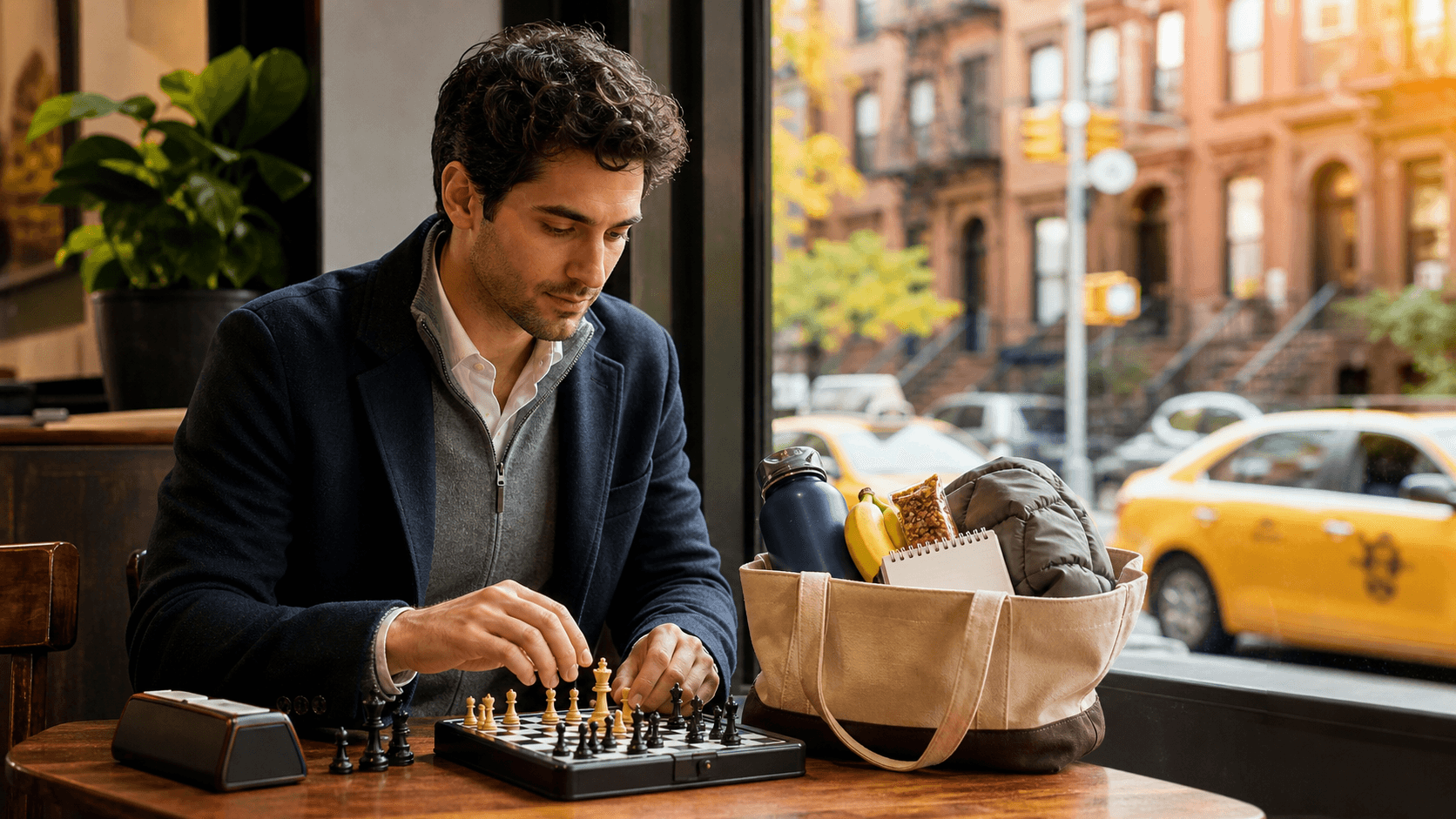
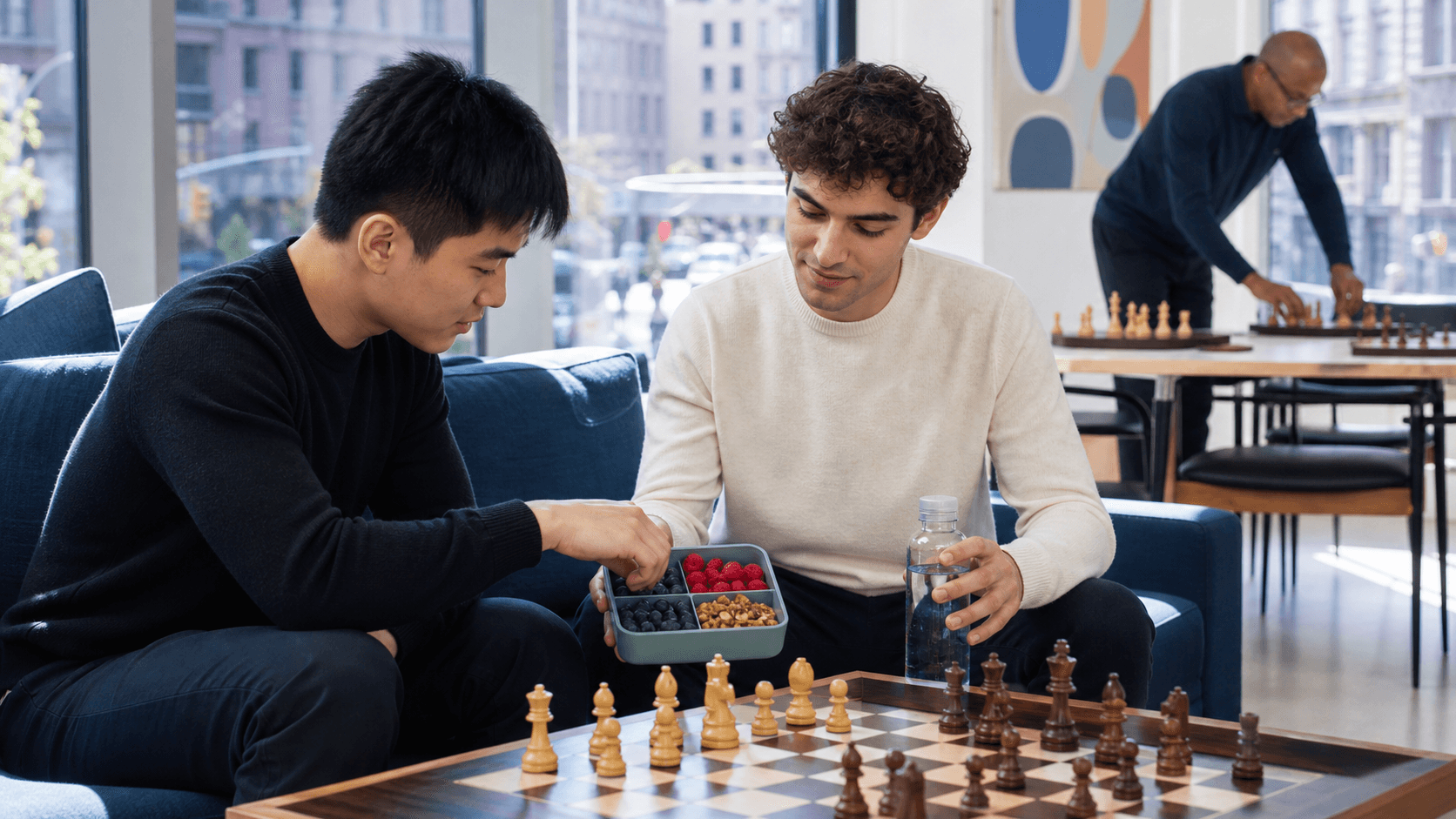
Good options to pack include:
- Whole grain crackers with nut butter
- Oatmeal or granola bars with lower sugar
- Apples, bananas, grapes, or berries
- Cheese sticks or yogurt cups
- A small handful of nuts or trail mix
In our current classes and newsletters, we talk with students about building this plan ahead of the next weekend's event, not when they are already rushed on the subway.
A simple plan for youth chess tournaments in Manhattan looks like this:
- Before round 1: A normal meal at home, with carbs plus protein, and not rushed.
- Between rounds: One small snack, not a full meal, about 30 to 45 minutes before the next round.
- End of day: A bigger meal after the last game, not squeezed in during a short break.
If you forget snacks, you can still make better choices near typical Manhattan venues:
- Fruit cups or whole fruit over candy or donuts
- Plain yogurt over ice cream or milkshakes
- Salads or simple sandwiches instead of giant burgers and fries
- Smaller portions if the next round is soon
Common pitfalls we see at tournaments:
- Heavy fast food right before a game, leading to sleepiness at the board
- Huge sugary drinks that give a quick buzz, then a crash during a long time scramble
- Constant grazing all day so the stomach and brain never get a real break
In our classes, we talk with students about "thinking fuel." Food choices are part of a serious chess routine, just like checking pairings and writing moves. We keep it age-appropriate too, and right now many of our students are practicing these choices in preparation for their upcoming weekend tournaments.
For younger kids:
- Smaller portions, since their bodies are smaller
- Snacks every 2 to 3 hours instead of big meals
- Simple choices with familiar foods that do not upset their stomach
For teens playing longer time controls:
- Slightly larger, more balanced snacks
- A light breakfast and a mid-morning snack
- A real but not heavy lunch during a longer break, then one more snack later
The goal is to walk to the board feeling light, steady, and ready to think, not stuffed or starving.
Hydration Habits That Support Sharp Thinking
Crowded Manhattan halls can feel hot and stuffy. Mild dehydration often shows up at the board as lazy calculation, missed tactics, and rushed choices in time pressure. Players might not feel "thirsty," but their thinking speed can drop.
In our current training cycle, we are reminding students to treat water as part of their tournament preparation for the next series of scholastic events.
A simple water plan helps:
- Before round 1: One glass of water with breakfast, and a few small sips on the way to the venue.
- Between rounds: A few steady sips every 15 to 20 minutes instead of chugging a whole bottle at once.
- During the game: A small sip when the opponent is thinking, not every move, so bathroom trips do not become a distraction.
Practical tools for tournament days:
- A labeled water bottle in the backpack
- A routine to drink right after each game ends
- A reminder from parents to sip slowly, not to finish the whole bottle in one go
At United States Chess Academy, we often talk about chess as "mental athletics." Just like in sports, we want players to show up warmed up, fueled, and hydrated. When kids see water as part of their athlete routine, they are more likely to keep up the habit round after round.
Quick Emotional and Analytical Reset After Each Game
As soon as a game ends, emotions are usually high. Whether the result was a big win or a painful loss, the first 5 to 10 minutes after shaking hands can set the tone for the rest of the day.
We are actively rehearsing this reset process in our weekly classes right now so that, at the upcoming tournaments families see in our latest newsletter, students already know what to do after each game.
We suggest a short cool-down:
- Walk away from the board area with a parent or coach.
- Take 5 slow breaths, in through the nose and out through the mouth.
- Do a short walk in the hallway or outside if allowed. No phone, no board, just moving.
Then we use a mini-analysis routine that matches what we do in our classes and in online lessons. Instead of trying to replay everything, we ask three simple questions.
- What was the critical moment of the game?
- What is one idea from the opening that I want to remember for next time?
- How was my time management, and what would I change?
This keeps the focus on learning, not on blaming.
Parents have an important role here. We suggest:
- Offer support and calm, not chess advice: "I am proud of how you are trying," instead of "Why did you hang that piece?"
- Save strong opinions for later, after a coach has seen the game.
- Avoid long emotional talks in the hallway right before the next round.
Coaches, whether on-site or in later online review sessions, can then go deeper with the full score sheet. That is where patterns, plans, and specific positions get real attention.
This quick reset builds the same growth mindset we train in our study groups and homework. Every game becomes a small lesson, not a final judgment on who the player is.
Focus Drills to Use in Crowded Manhattan Venues
Youth chess tournaments in Manhattan are full of noise, tight spaces, and friends running around between rounds. All of that social energy is fun, but it can also pull a player out of a focused state right before a tough game.
In the weeks leading up to our next round of weekend events, our coaches are running the same short focus drills in group classes and at our Central Park camp so students feel like tournaments are an extension of what they already practice with us.
- Quick visualization exercise
Set a timer for 60 to 90 seconds. The player closes their eyes and:
- Sees an empty board in their mind
- "Places" a knight on a square and names its legal moves
- Moves the knight around the board, calling out the squares silently or quietly
- Short tactical burst
Use a small pocket set or a phone app if allowed by the tournament rules. Set a strict time limit: 5 tactics in 5 minutes, then stop. The goal is to wake up the pattern-recognition part of the brain without causing new stress. This is similar to what we assign in our online lessons, especially in the weeks right before big scholastic events.
- Breathing plus future-board routine (60 seconds)
- Sit or stand tall, feet flat.
- Breathe in for a slow count of 4, hold for 2, out for 4.
- On each exhale, picture sitting at the next game, feeling calm and focused, hand hovering over a piece and double-checking tactics.
We also match drills to the previous round's result:
After a win:
- Use calming drills: deep breathing and simple visualization to bring the energy down.
- Focus on steady moves, not "I am going to crush the next person."
After a loss:
- Use confidence drills: 5 quick tactics the player is likely to solve, plus a reminder of one thing they did well in the last game.
- Reset the story from "I am playing badly today" to "I am learning and I still have more games to play."
We rehearse these routines in our regular classes so that, at tournaments around Manhattan, kids are not trying something new under pressure. They already know their steps, and this month we are tying these steps directly to the events highlighted in our newsletter.
Turn Your Child's Next Manhattan Event Into a Training Day
Every local event, from a small school tournament to larger Manhattan scholastic events, can become part of a longer training plan. When families treat tournament days as practice for a strong between-round routine, rating gains usually follow as a side effect, not the main goal.
In our current newsletters and class announcements, we encourage families to use the very next tournament on their calendar as a "test day" for this routine.
A simple checklist to review together before leaving home:
- Packed snacks with carbs and protein
- Labeled water bottle
- Pocket set or device for short drills, if allowed
- Printed or written reset steps: cool-down, mini-analysis questions, and one or two favorite focus drills
Families who are already working with United States Chess Academy coaches can match this list to what their child is practicing in weekly lessons, small-group classes, and any seasonal camps. Students can also bring their tournament games for deeper review later, either in person or by sharing games through our online training resources, so every weekend event feeds back into their long-term improvement.
When parents and kids plan this between-round routine together and stick with it for a full day at one event, they quickly see what works and what feels hard. That honest feedback is what really helps us, as coaches, fine-tune each player's training so the next Manhattan tournament your family attends feels a little calmer, a little clearer, and fully connected to the work we are doing together in class and in our current programs.
Help Your Child Compete With Confidence And Grow Their Chess Skills
If your child is ready to put their skills to the test in real games, we invite you to explore our youth chess tournaments in Manhattan. At United States Chess Academy, we design every event to be welcoming for newer players while still challenging more experienced competitors. Our staff supports students through each stage of the tournament so they can focus on learning, competing, and having fun. If you have questions about which section is right for your child or how to get started, please contact us.