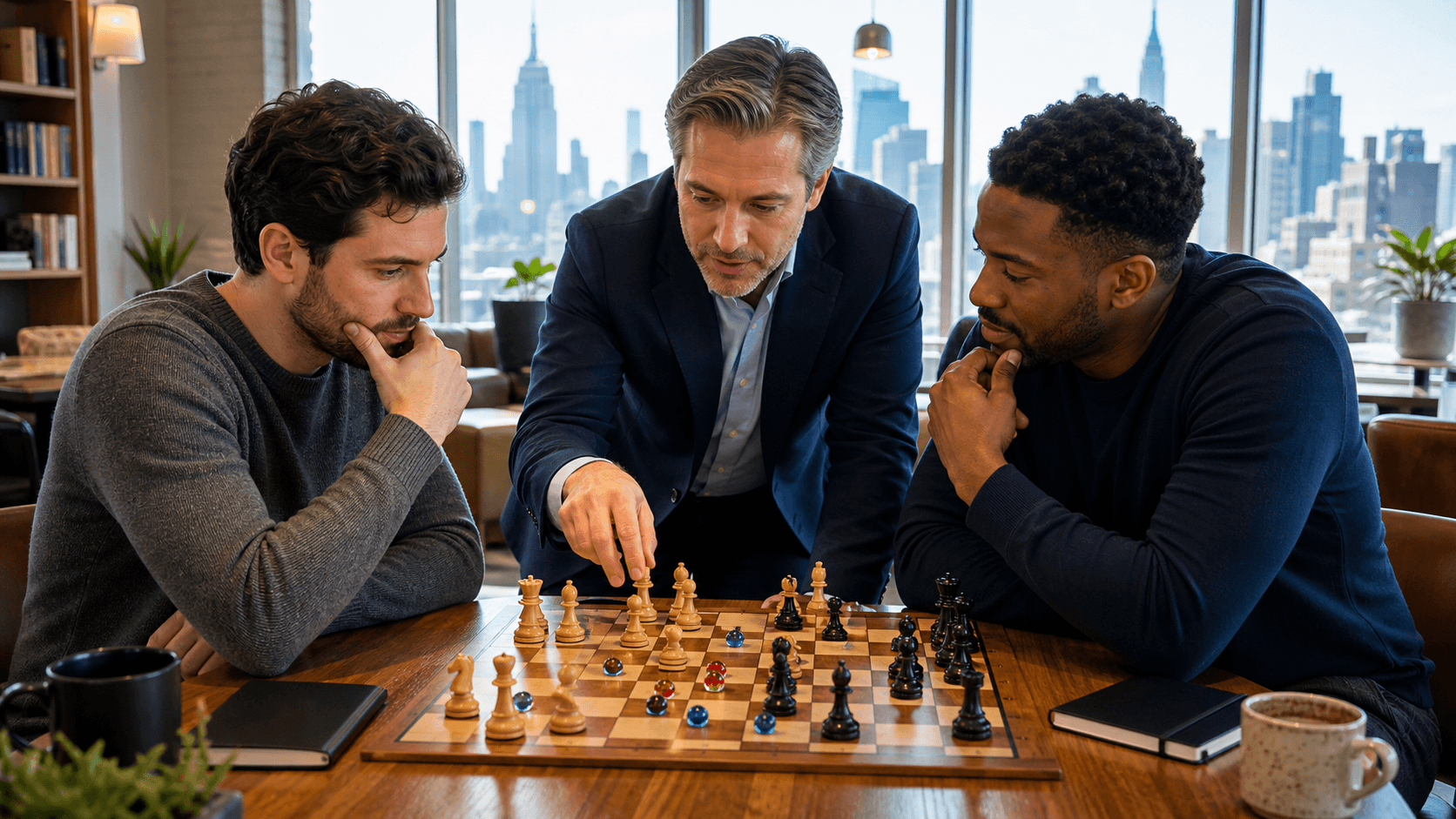
Turn Every Move Into a Question-Driven Habit
Many Manhattan players hit a wall in their chess growth not because they lack talent, but because of how they study chess. They replay games, scroll puzzles, and glance at engine moves, but they do not stop to ask clear questions at key moments. The work feels serious, yet ratings barely move.
A question-based routine flips that pattern. When every move is tied to a simple, concrete question, you start thinking like a coach, not just a spectator. Your brain is forced to explain, compare, and choose. That type of work sticks under tournament pressure, whether you are playing a weekend event on the Upper West Side or a scholastic round at Hunter.
At United States Chess Academy in New York City, our titled coaches lean on question-driven methods in camps, group classes, and private lessons. Late summer is a perfect time to build these habits, but the routine itself works any time of year. The goal is simple: turn every minute of chess study into decisions you can trust when the clock is ticking.
Why Typical Study Routines Stall Manhattan Players
Many local players study hard, but in ways that do not translate to better decisions over the board. Common patterns show up everywhere in the city.
Typical habits look like this:
- Long blitz marathons at clubs and cafes, with zero written notes
- Speed-running puzzles on the subway with no review of mistakes
- Clicking through grandmaster games, move by move, without asking why
- Running a quick engine check and trusting the computer more than your own thinking
These activities are not useless, but they often create an illusion of hard work. You feel busy and tired. You spend hours on chess. Yet if you are stuck around 1200, 1600, or even 2000, something in the routine is not doing its job.
The real bottleneck is usually not more knowledge, more openings, or more puzzle packs. The bottleneck is the quality of questions you ask yourself, both during your games and after them. If you never ask, "What exactly is my opponent threatening?" you keep blundering. If you never ask, "What changed in the position after this move?" you keep missing plans.
Question-based chess study slows you down just enough to notice these turning points. You still play blitz and puzzles, but now each session is shaped by a few repeatable questions that you answer in writing.
The Core Question Framework for Daily Chess Study
You do not need a giant workbook to shift how you think. You just need a small, repeatable set of questions that you ask every day.
Here is a simple framework you can use in a 30 to 45 minute session:
Before you play or make a candidate move, ask:
- What is my opponent's last move threatening?
- Are there any checks, captures, or direct threats for either side?
- What are my three best candidate moves and why?
After you decide on a move, ask:
- What changed in the position after my move?
- Which of my pieces improved, and which got worse?
- Did I weaken any squares or leave something unprotected?
You can use this framework with:
- A slow online game
- A position from your last over-the-board event
- A classic game you are replaying from a book
Write the questions and your answers in a notebook or digital file. Date each session and keep it short and honest. Over time, you build a habit loop: same time of day, same type of questions, same method of recording. That pattern fits nicely around busy New York schedules.
At United States Chess Academy, our coaches adjust this framework by level. For newer players, we might build a short checklist like "Check captures, checks, and threats every move." For advanced students and titled hopefuls, the questions become deeper, such as "What are the three main candidate plans, and how does my evaluation change after each line?" Students who work with us in person or in online lessons often start with this base and then grow a custom list as we see their games.
Building Question-Based Routines Around Your Life in NYC
Chess routines do not need to be long to be strong. They just need to be consistent and question-focused. You can fit that into a Manhattan day without turning your life upside down.
Here are some simple patterns that match city life:
- Micro-sessions on the subway: Take one position on your phone, pause the board, and answer three written questions: What is threatened, what are three candidate moves, which one feels safest, and why?
- Lunch-break drills: Pick a single game and spend 10 to 15 minutes on just one or two positions. Write out your top three candidate moves in each and explain why you rejected the others.
- Evening cool-down: After work or school, review one moment from a past game and ask, "What did I miss about my opponent's resources here?"
A sample weekly structure might include:
- Two days of focused tactics, each puzzle answered with at least one question like "What moved, and what is now hanging?"
- Two days of game review, one classic game and one of your own
- One day for deeper analysis of a single loss or draw, with written questions at each turning point
- One day for live play, online or in person at local events such as scholastic tournaments at Hunter or weekend tournaments in Manhattan
If you treat August like a personal training camp, you can let these patterns settle in before the busy fall seasons. Many students use our Central Park camps as an anchor, then carry the same style into daily home study. You can do the same by blending your solo work with group learning, whether it is a city event or a structured program like our Central Park Camp.
Turning Tournament Games Into a Question Lab
Tournament games are gold for chess study if you know how to mine them. Instead of dumping each game into an engine and scrolling through computer moves, treat every round like a question lab.
Right after the game, before you see any engine lines, ask:
- Where was my first big independent decision, the first move that was not pure theory or obvious?
- At that moment, what was I afraid of, and was that fear real?
- Did I spend enough time on that move compared to how important it was?
Later, at home or during a class, ask:
- At what move did my evaluation of the position first differ from the engine?
- What question, if I had asked it during the game, might have saved me?
- Did I miss a simple tactic or a long-term plan, and what pattern does that show?
A simple Manhattan weekend routine might look like this:
- Keep your score sheets from every round
- On Sunday night or Monday, choose one or two critical moments from each game
- For each moment, write a mini set of questions and answer them before checking any engine
This gives you a focused, human-first review. When you later check with a computer, you are comparing your thought process to a benchmark, not just copying moves.
At United States Chess Academy, we often run small-group game analysis sessions where this process is done together. Coaches create question templates for common problems like time trouble, fear of sacrificing, or over-pushing for a win with Black. Over time, your own games become custom training material instead of just a record of wins and losses.
From Questions to Rating Gains
The main shift is simple: move away from volume-based chess study and toward question-based routines. Instead of asking, "How many games and puzzles did I do?" ask, "How many clear questions did I answer about real positions?"
A useful 14-day challenge looks like this:
- Every day, pick one position or game
- Write down at least five structured questions using the frameworks above
- Answer them in full sentences, even if you feel unsure
- Only then, if you want, compare your move to a strong player or an engine
You can apply this challenge while playing local events around Manhattan, preparing for scholastic seasons, or working inside a structured environment. Many players combine their personal question journals with group work at United States Chess Academy, so titled coaches can spot patterns in their answers and sharpen the exact questions they use.
When you study chess this way, every puzzle, every slow game, and every lesson is tied to better decisions at the board. Over time, that is what pushes your rating forward, not just more time spent staring at moves. The habit is small and simple, but the effect shows up every time you sit down, press the clock, and know exactly what to ask yourself before you move.
Take The Next Step To Sharpen Your Chess Skills
If you are ready to turn what you have learned into real over-the-board results, now is the time to study chess with structured guidance. At United States Chess Academy, we tailor each lesson to your level so you can progress with clarity and confidence. Whether you are aiming for tournament success or simply deeper understanding, we will meet you where you are and help you build from there. Have questions about schedules or programs, or need help choosing the right option for you? Just contact us and we will walk you through your next move.