How Question-Based Chess Builds Real Thinkers
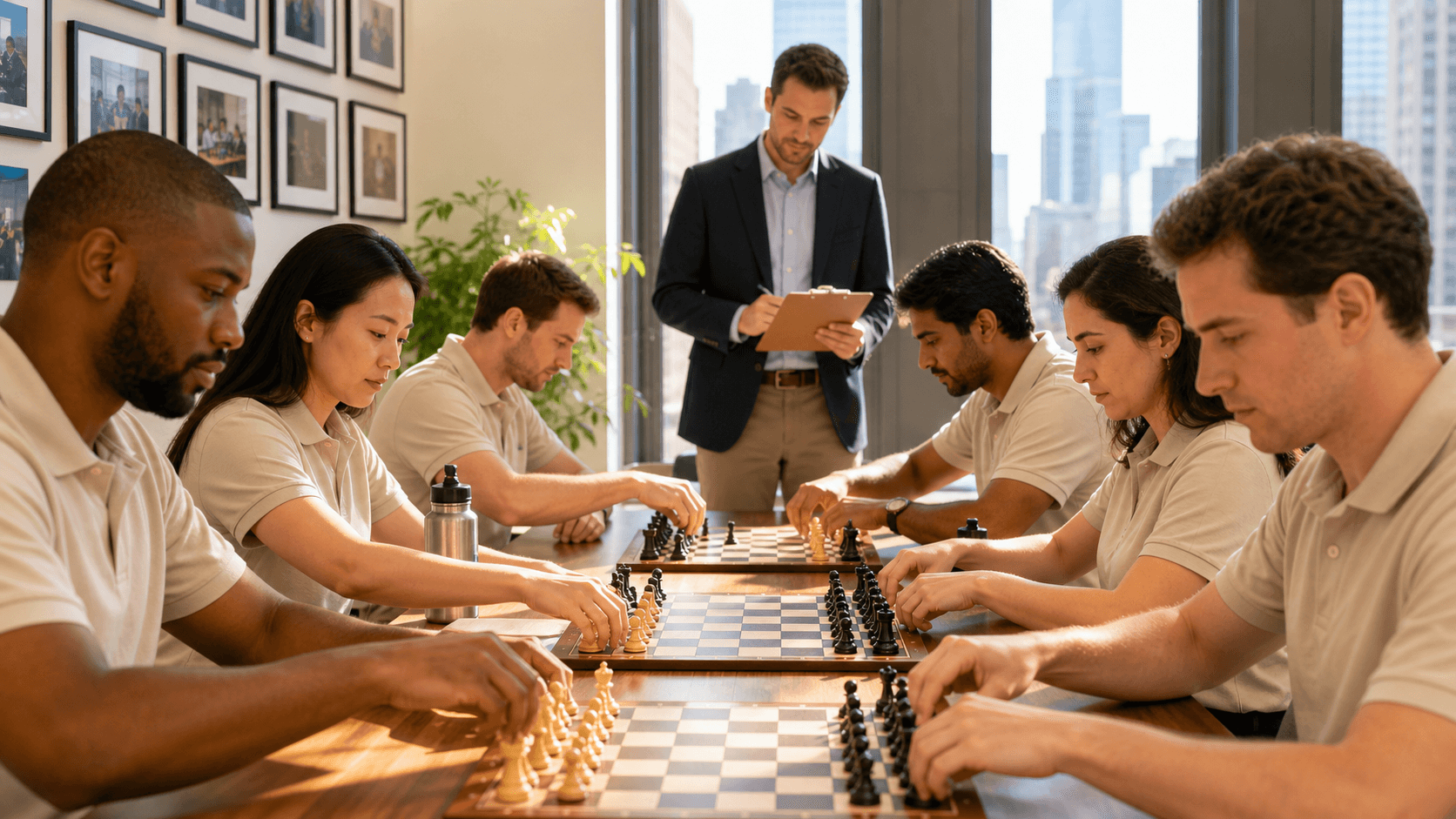
Strong chess skills come from strong thinking skills. That is why our kids in chess classes in New York spend so much time answering questions instead of copying moves. During class, a parent might watch a coach pause at a key position and ask, "What are all the checks in this position?" The room goes quiet. Kids lean in, raise hands, and start sharing ideas. No move is given away for free. Every move has to be earned.
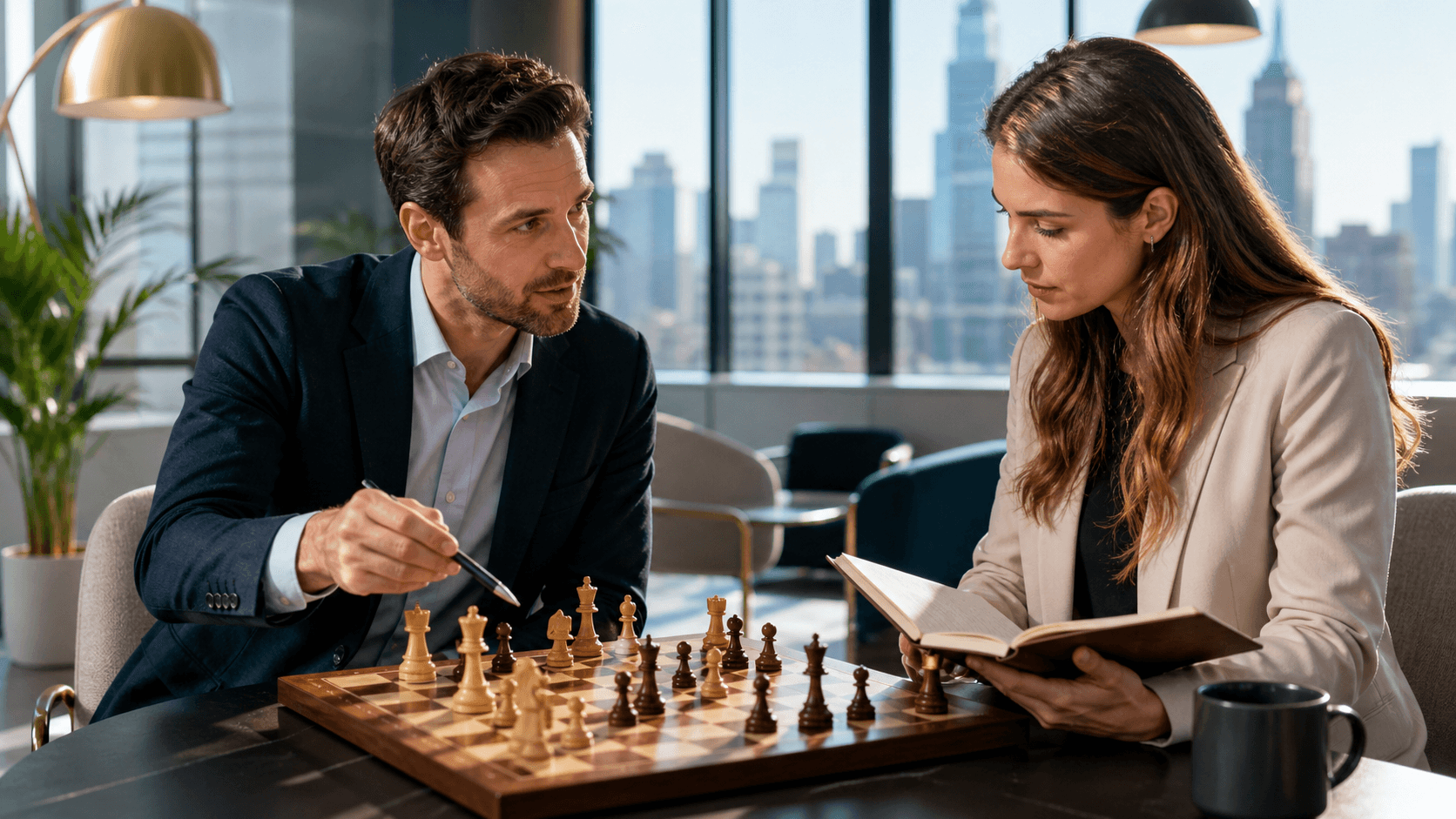
This is what we mean by a question-based, or Socratic, approach. Instead of saying, "Play this move, it wins," our coaches ask questions that push students to:
- Notice what is really happening in the position
- Compare different moves and ideas
- Explain why a move is good, bad, or just "okay for now"
Parents tell us they hear the difference at home. Kids explain why they made a move instead of saying "because the coach told me." They start thinking one or two steps ahead in everyday life, not just on the board. They feel more confident sharing their ideas, even when they are not sure they are right yet. Our goal is simple: use our Manhattan chess classes to grow independent problem-solvers, not just kids who memorize openings and hope for the best at the next tournament.
Inside Our NYC Question-Based Chess Classes
A typical lesson has a steady rhythm that students get used to. The pieces change, the puzzles get tougher, but the structure stays the same so kids feel grounded and safe to think.
Most classes follow a pattern like this:
- Quick warm-up puzzle to get brains moving
- Group discussion at a demo board led by coach questions
- Practice games where kids apply the ideas
- Short reflection where students answer, "What did you learn from this game?"
In the warm-up, a coach might say, "Circle all the checks, captures, and threats you see." Kids learn to scan the whole board, not just stare at the one piece they want to move. During the main lesson, the questions are tuned to the group. For newer players, it might be:
- "Is this move safe?"
- "What is hanging?"
- "What did your opponent just threaten?"
For more advanced students getting ready for local Manhattan events or strong scholastic tournaments like Hunter, questions become more complex:
- "What are your candidate moves in this position?"
- "What is your long-term plan?"
- "If you play this, what three replies should you be ready for?"
Parents tell us that when they peek in, they see kids:
- Explaining why they rejected a flashy sacrifice
- Predicting what the opponent wants next
- Challenging each other with, "But what if they do this?"
The same style carries into our online groups. In our online lessons, kids still hear, "What changed in this position?" and "Did you consider any forcing moves?" The board may be on a screen, but the thinking work is the same.
Teaching Kids to Ask Better Questions Over the Board
Stronger chess is not only about finding better answers. It is about learning to ask better questions every single move. Our coaches model that inner voice out loud so kids can copy it in their own minds.
We help students build a simple thinking checklist, like:
- "What is my opponent threatening?"
- "What are my candidate moves?"
- "If I play this, what might they play?"
- "Is there any forcing move I am missing, like a check or capture?"
At first, the coach is doing most of the talking:
- "What is their threat?"
- "How can you defend and improve at the same time?"
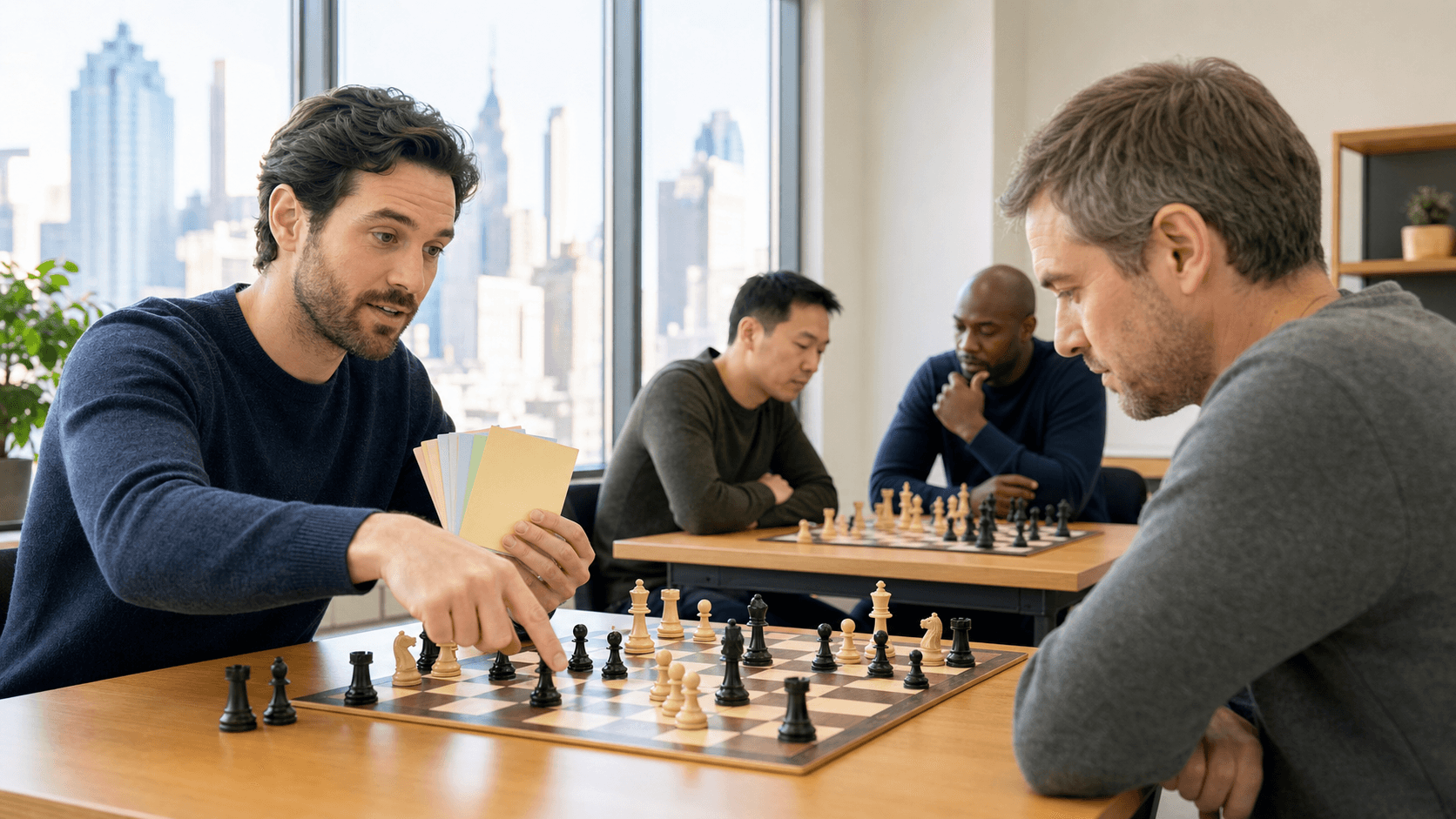
Over time, we shift. In training games and small-group analysis, we nudge students to ask the questions themselves:
- "Ask your partner, what is your plan here?"
- "Before you move, say out loud what you think their next move is."
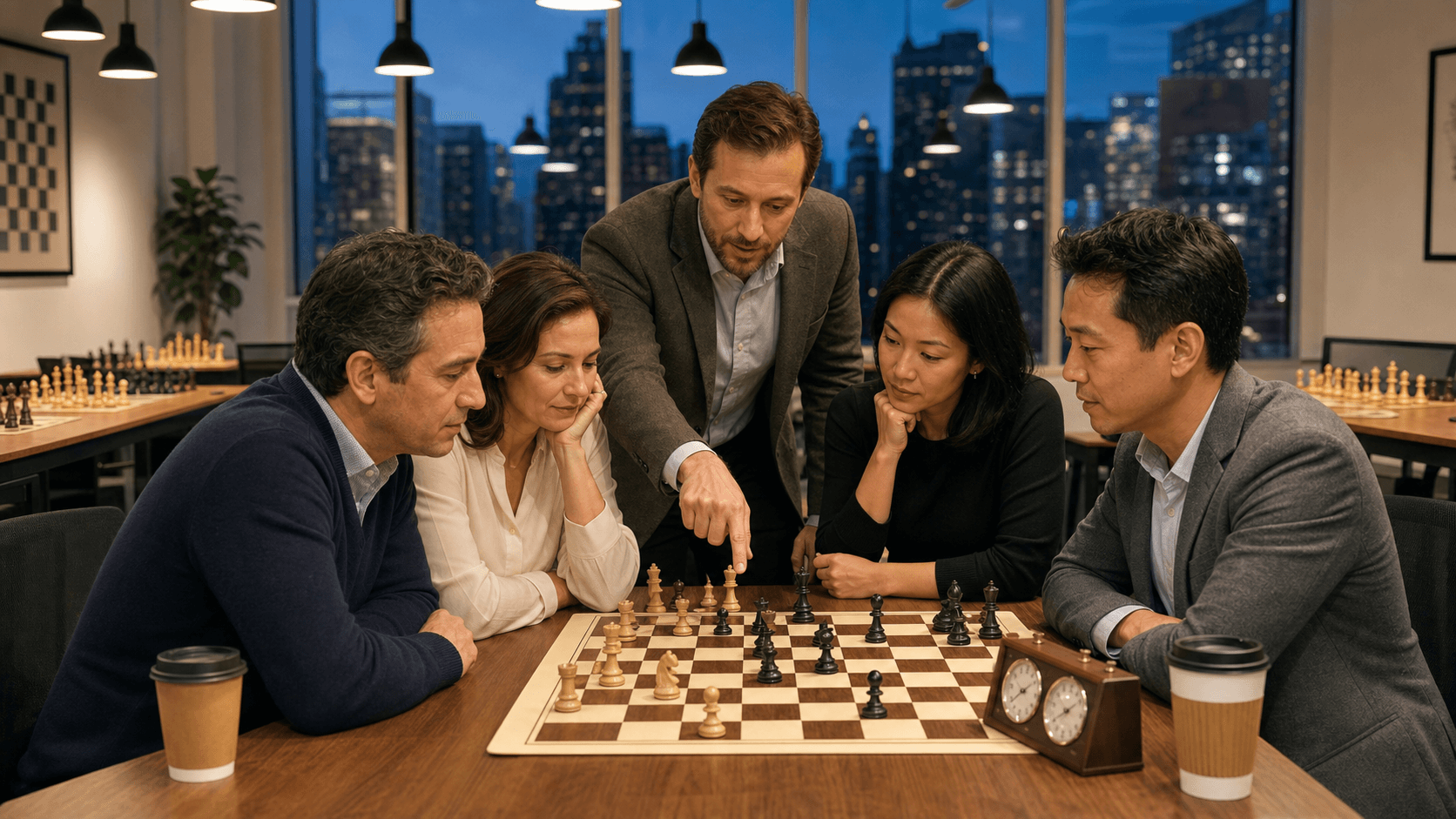
Parents often see small crowds of kids gathered around a board after class. They are debating:
- "Is there any forcing move we missed?"
- "What happens if Black doesn't capture?"
- "Does that tactic really work, or are we blundering a piece?"
In these moments, the coach steps back a little. Kids learn to disagree kindly, listen, and change their minds when someone shows a better line. That is exactly the kind of thinking that helps them in school and in life, not just at the chessboard.
From Class to Tournament Board: Training Under Pressure
Tournament games bring a different kind of pressure. The room is quiet, clocks are ticking, and every move feels big. We want our students to feel ready for that, whether they are playing at a Manhattan scholastic event, a strong city program like Hunter, or at a weekend tournament in another borough.
Question-based training gives kids something steady to lean on under stress. When they feel nervous, they can come back to:
- "What changed since the last move?"
- "What is my opponent threatening?"
- "What are my two or three best options?"
- "What is the most forcing move I can safely play?"
Before tournaments, classes often turn into focused prep sessions. We go over recent games and ask:
- "Where did your thinking stop?"
- "What question could you have asked yourself right here?"
- "Were you playing fast because of the clock, or because you stopped checking your ideas?"
We also help kids link their training across formats. The same question framework shows up:
- In our Manhattan classroom
- During online training games and reviews
- In seasonal programs like our Central Park camp
This way, when a student sits at a real tournament board, nothing feels new except the opponent. The thinking routine is already there.
Why Question-Based Chess Helps Beyond the Chessboard
Parents rarely sign up only for trophies. They want their children to grow as thinkers and as people. Question-based chess builds those habits in a very natural way.
In class, kids learn to:
- Slow down instead of guessing
- Consider more than one option
- Justify answers clearly
- Hear feedback without shutting down
Families often tell us they see echoes of chess at home. Kids start catching their own mistakes on math homework by saying, "Wait, I should check this another way." In school, they are more willing to raise a hand and ask a clarifying question. Some even explain board games to younger siblings using the same language they hear at the demo board: "What is your plan?" or "What is the best way to use your pieces?"
The life skills grow quietly:
- Resilience: after a loss, we always ask, "What could you try differently next time?"
- Empathy and sportsmanship: kids listen to an opponent's ideas in post-game review, not just rush off
- Focus: students learn to think clearly even with city noise outside the window or a busy tournament hall around them
These habits do not show up all at once. They build across seasons as kids move through weekly classes, special programs, and scholastic events around the city. Question by question, game by game, they start to see themselves as thinkers who can handle hard problems, on and off the board.
Join a Class Where Every Move Sparks a Question
Chess looks simple from the outside, just 64 squares and some pieces. Inside a good class, it is a lab for thinking. Every position is a chance to pause, ask a better question, and find a clearer answer. That is the heart of what we do at United States Chess Academy, in Manhattan.
Whether a child is brand new to chess or already playing at local tournaments, the same question-first approach meets them at their level. Beginners learn to ask "Is this move safe?" while advanced students learn to plan deeply and manage tense positions. Our in-person and online groups share the same structure, so kids feel steady as they move between home training, class, and tournament boards.
Parents can see this growth over time. A child who once guessed at moves now pauses, thinks, and explains their reasoning. They bring that calm, curious mindset into tough homework, group projects, and busy days in New York. When they sit down at a board, whether in a classroom, at a city event, or at home, they carry a quiet confidence: I know how to ask good questions, and I can think my way through what comes next.
For families ready to plug into that kind of learning, it is easy to get started with our programs and sessions through our class listings and current offerings. Every game becomes more than just a win or loss. It becomes one more step toward a child who trusts their own mind.
Build Strategic Confidence With Expert Chess Coaching
If you are ready to help your child or yourself think more clearly, solve problems faster, and compete with confidence, our chess classes in New York are the ideal next step. At United States Chess Academy, we tailor each lesson to your experience level and goals so you see steady, measurable progress. We welcome new and returning students into small, focused groups that keep learning engaging and practical. Have questions about placement or scheduling, or need help getting started, simply contact us.