Why Question-Based Chess Transforms Adult Players
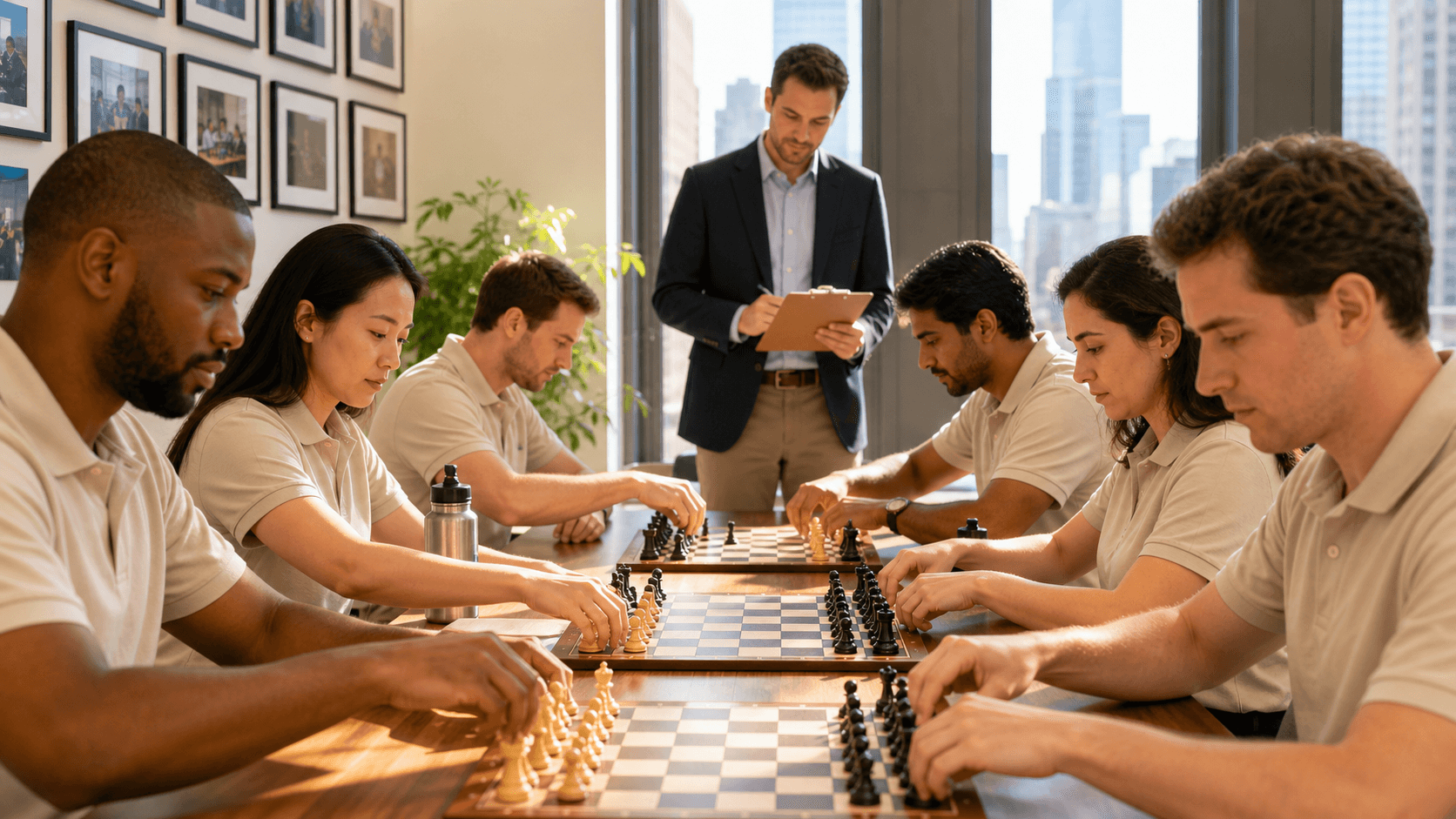
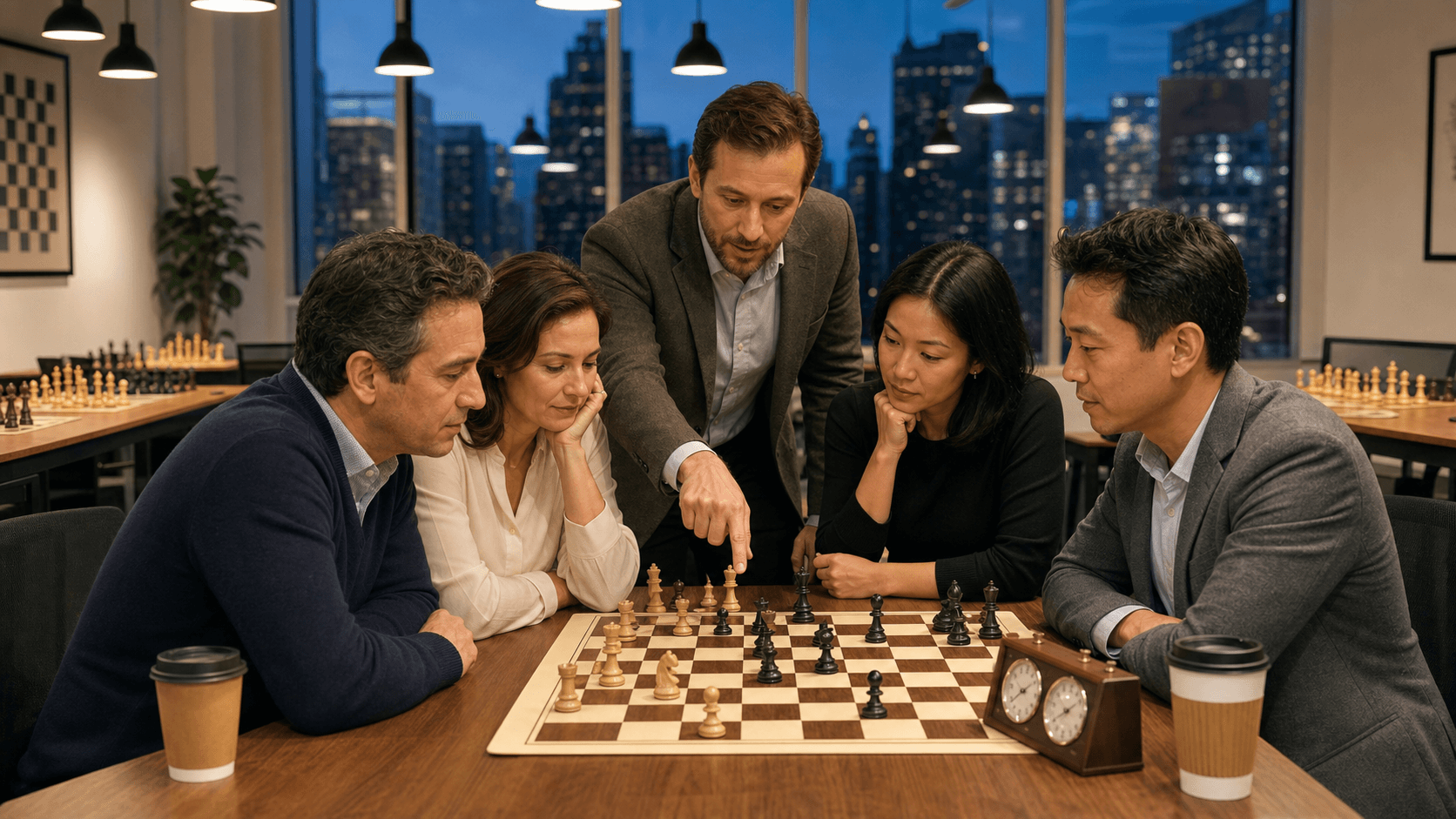
Adult chess classes in New York have a very specific feel in the evening. People come in straight from work, still in office clothes, coffee in hand, ready to think hard for 90 minutes. The room goes quiet as a Grandmaster points to a position on the board and fires off a question: "What is the threat?" Hands go up, ideas get tested, and nobody is hiding in the back.
This is question-based learning. Instead of a coach just showing "the right move," adults answer focused questions over and over, such as:
- What are my candidate moves?
- What changed after the last move?
- What is my opponent threatening right now?
The goal is not to copy a Grandmaster's move, but to copy how strong players think. When adults train this way, they are not just learning openings, they are building a clear decision process that holds up under tournament pressure. That is why we see adults improve quickly when their practice is built around questions, not random puzzles.
In our current adult groups, both in New York and online, classes are filled with these drills, structured game reviews, and preparation blocks aimed at upcoming events like local Manhattan weekend tournaments, Hunter events, and other rated competitions. Let's look at why adults can still improve fast, how the question method works, and how it links directly to real results on the board.
Why Adults Can Still Learn Chess Shockingly Fast
One of the first things adults say in our intake calls is some version of "I started too late." They worry that kids will always calculate faster, remember more theory, and leave them behind in tournaments. We hear it all the time.
The truth is, adult learners bring different strengths:
- Strong verbal reasoning and love of clear explanations
- Solid pattern recognition from work and life experience
- Discipline to show up consistently, even when tired
- Ability to self-reflect and be honest about mistakes
Those strengths match question-based training perfectly. Adults like structure. When they get a simple thinking checklist, they use it. When they get clear language for ideas like "weakness," "initiative," and "conversion," they stop guessing and start making logical choices.
Our coaches turn this into rapid progress with:
- Repeatable decision routines before every move
- Short "thinking scripts" to run in tactics, endgames, and time trouble
- Consistent language that is used in every class and game review
Adults in our current cycles often track how many times they asked themselves their key questions in each sparring game. Over a few tournament rounds, they see fewer random blunders, more confident tactics, and stronger finishes in equal positions. Age matters less than the quality, intensity, and structure of practice, and question-based lessons are built to make every move feel like a tournament decision.
Inside Our Question-Based Chess Classes in New York
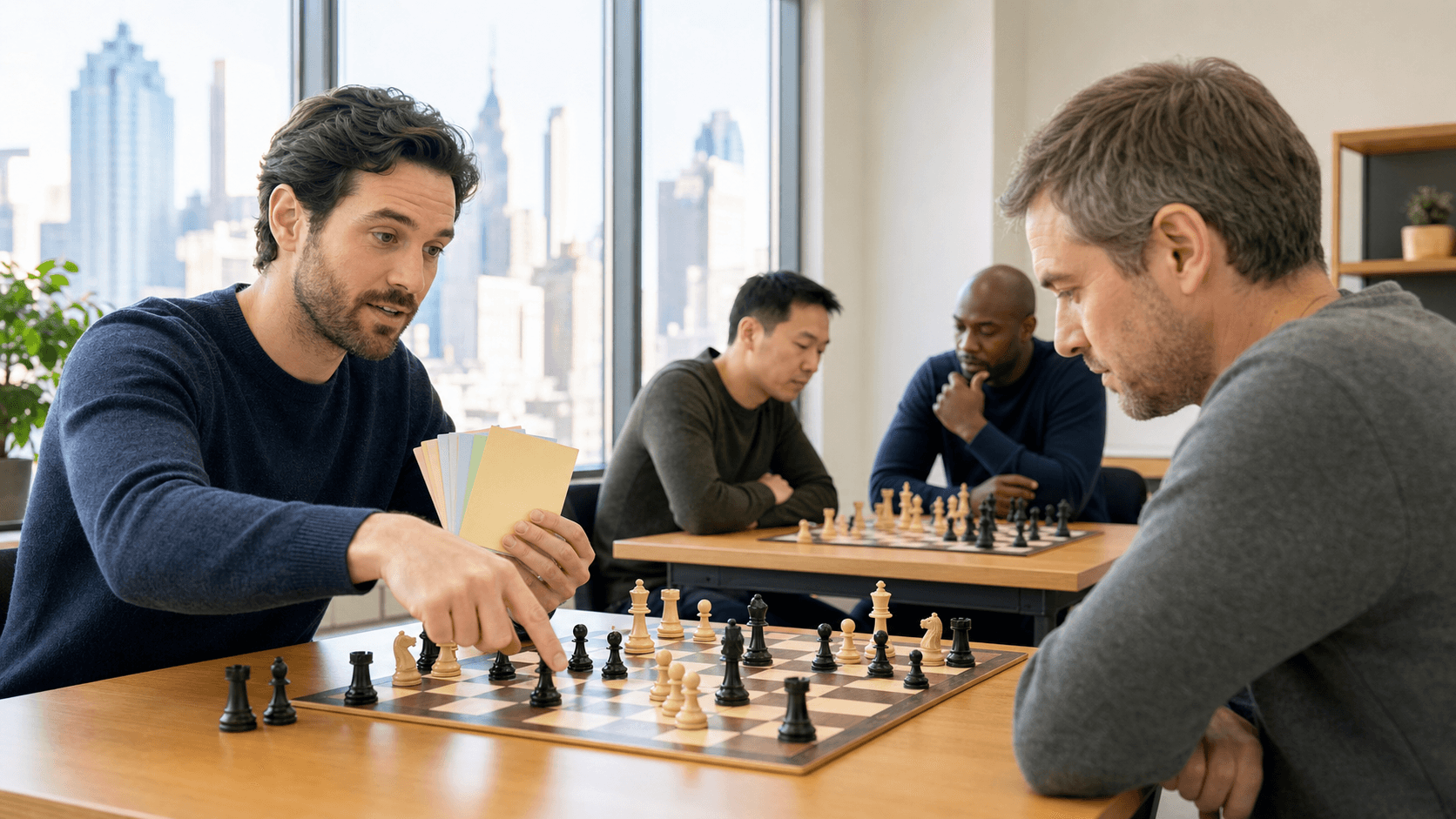
A typical adult session starts with a fresh position, often pulled from a recent event or from games our own students played. The coach sets the board, gives a bit of context, then starts asking questions. Students answer out loud, on the demo board, in chat for online groups, or even on paper worksheets.
We focus on a few core question sets each week.
Before every move:
- What is my opponent threatening?
- What changed since the last move?
- What are my candidate moves?
During tactics:
- What checks, captures, and threats do I have?
- What is undefended or overloaded?
- What happens if I trade, and who benefits?
In endgames:
- What should my winning or drawing plan be?
- What is the worst-case defense for my opponent?
- What pawn structure do I want to reach?
Our recent cycles have included very practical topics like endgames you actually see on a weekend, and how to stop blundering in time trouble. Each topic is framed as a question set. For time trouble, that might mean a tiny version of the checklist that still works when the clock is low.
Our New York in-person groups and our live online lessons follow the same curriculum. Adults might be in different rooms, but they work through the same worksheets, solve the same model positions, and then try the ideas in weekend practice events or local tournaments around the city.
If you are a beginner or a returning player, you are not expected to know the answers right away. The point is to build the habit of asking the questions. Coaches model the thought process, correct it gently, and repeat it until it starts to feel automatic.
How Question Drills Turn Into Real Rating Gains
Classroom drills are nice, but adults care about one thing: do my results get better when I sit down for a rated game?
We set up full training cycles that lead into real tournaments in New York, from local club events to popular weekend Swiss tournaments in Manhattan and at schools like Hunter. The cycle usually has three parts:
- Weekly question sets and themed positions
- Practice games or small internal events
- Rated tournaments to test the thinking process
A common improvement pattern we see goes like this:
- Month 1: Blunders drop, because players finally ask "What is the threat?" every move.
- Month 2 to 3: Tactical strength rises, because "checks, captures, threats" becomes a habit, not a suggestion.
- Month 3 to 6: Results in equal positions improve, as endgame and conversion questions guide play.
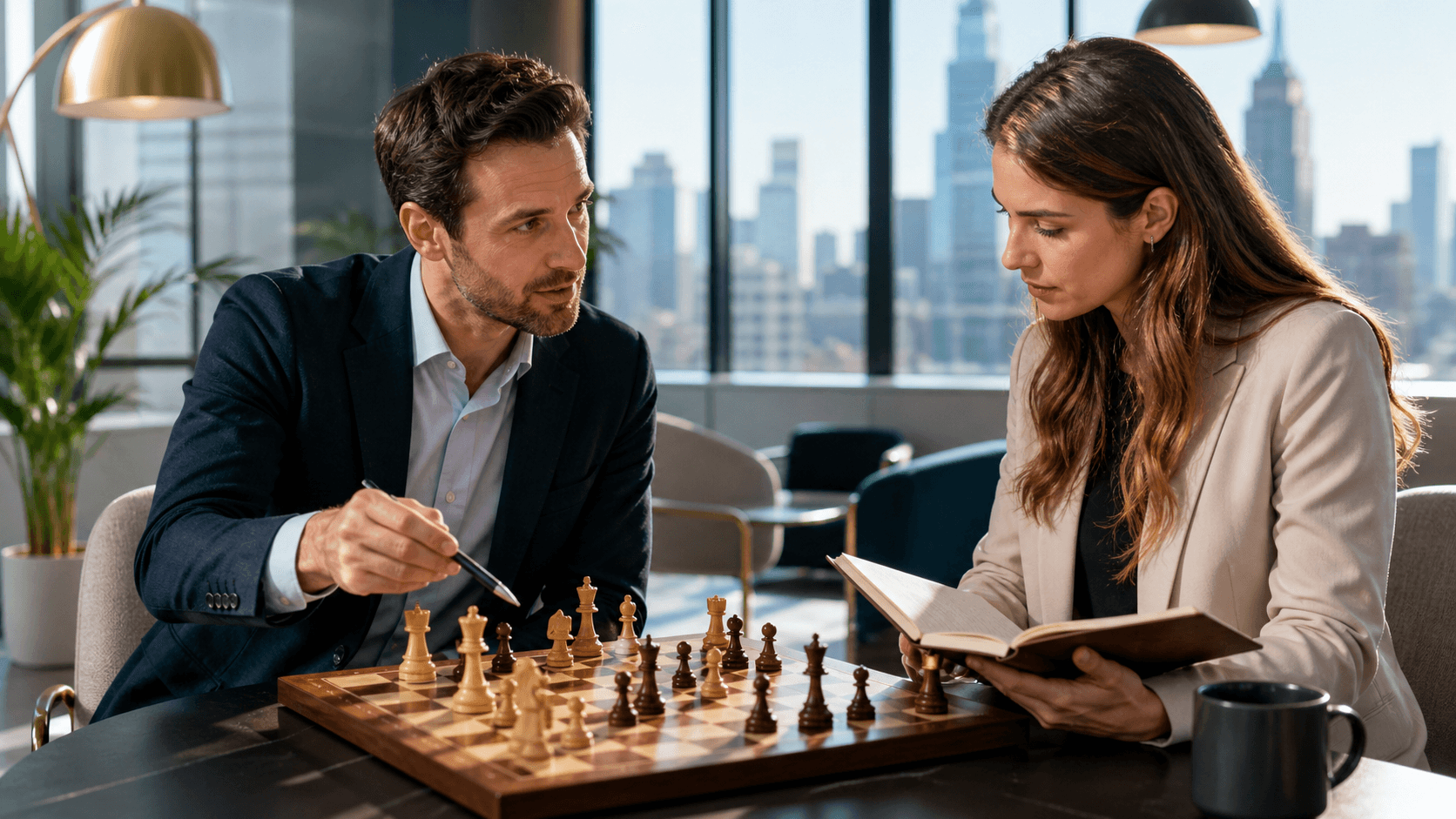
We build this into specific training tools. For example, in game analysis nights, adults must explain their last few moves using only questions: "What was I afraid of here?" "Which piece was worst and why didn't I fix it?" Before each big event, we run prep sessions focused on typical middlegame structures and the guiding questions for each structure.
Each tournament cycle becomes a small lab. Students go in with 1 or 2 "main questions" they are testing, like "Did I always identify my opponent's threat?" or "Did I check all forcing moves before I moved?" When games are reviewed, we return to those same questions. The adults who improve the fastest are not always the ones who study the most hours, but the ones who practice high-quality thinking questions in every class and every game they play.
Building a Fast-Track Adult Chess Plan for Fall
Late summer is a great time for adults to set up a focused plan before fall events in New York and national tournaments on the calendar. Instead of random study, we help adults build an 8- to 12-week roadmap that supports real tournament play.
A simple version looks like this:
Weeks 1 to 4:
- Core decision questions and blunder reduction
- Daily use of class worksheets and coach-picked puzzles
- Focus on "What is the threat?" and "What changed?"
Weeks 5 to 8:
- Opening structures you actually expect to see
- Middlegame question sets like "Which side is better and why?" and "What is my worst piece?"
- Model games linked to those exact questions
Weeks 9 to 12:
- Endgame patterns and practical plans
- Practice games with strict time rules
- At least one rated event to measure progress
Our coaches place adults in the right group for their level:
- Absolute beginners who want to learn safely and slowly
- Returning players around 800 to 1200 who need structure
- Ambitious improvers chasing 1400 to 1800 and beyond
Each group works with tailored question sets and homework that fit the stage they are in. Across our programs, including special options like our Central Park camp events and online match nights, adults see the same question-based approach in action. Newsletter updates often highlight upcoming cycles, friendly online matches, and partner tournaments in the city where adults can test their thinking routine under real but manageable pressure.
We encourage adults to think in terms of the next one or two tournament cycles, not some distant final rating goal. When the target is concrete, every class, every drill, and every training game lines up with playing better in that real event. For many, that is when improvement starts to feel not only possible, but predictable, one clear question at a time.
For those ready to step into this kind of structured work, it helps to commit to a block of time, treat your training as seriously as your over-the-board games, and keep your personal question checklist with you at all times. Whether you are playing at a local weekend event, a school tournament, or a quieter online match night, the same question habits can guide you from move one to handshake.
Adults do not need talent they missed in childhood; they need a way to think that fits how they already learn best. When every move starts with the right question, improvement stops feeling like a mystery and starts looking like a clear, repeatable process.
Build Lasting Confidence With Expert Chess Coaching
If you are ready to help your child or yourself think sharper and compete smarter, our chess classes in New York provide structured, in-person guidance for every skill level. At United States Chess Academy, we focus on personalized instruction that strengthens problem-solving, strategic planning, and tournament readiness. Tell us about your goals and schedule and we will recommend a training plan that fits your needs. Have questions about placement, availability, or pricing? Just contact us and we will walk you through the next steps.