Make Your First OTB Tournament Feel Like Home
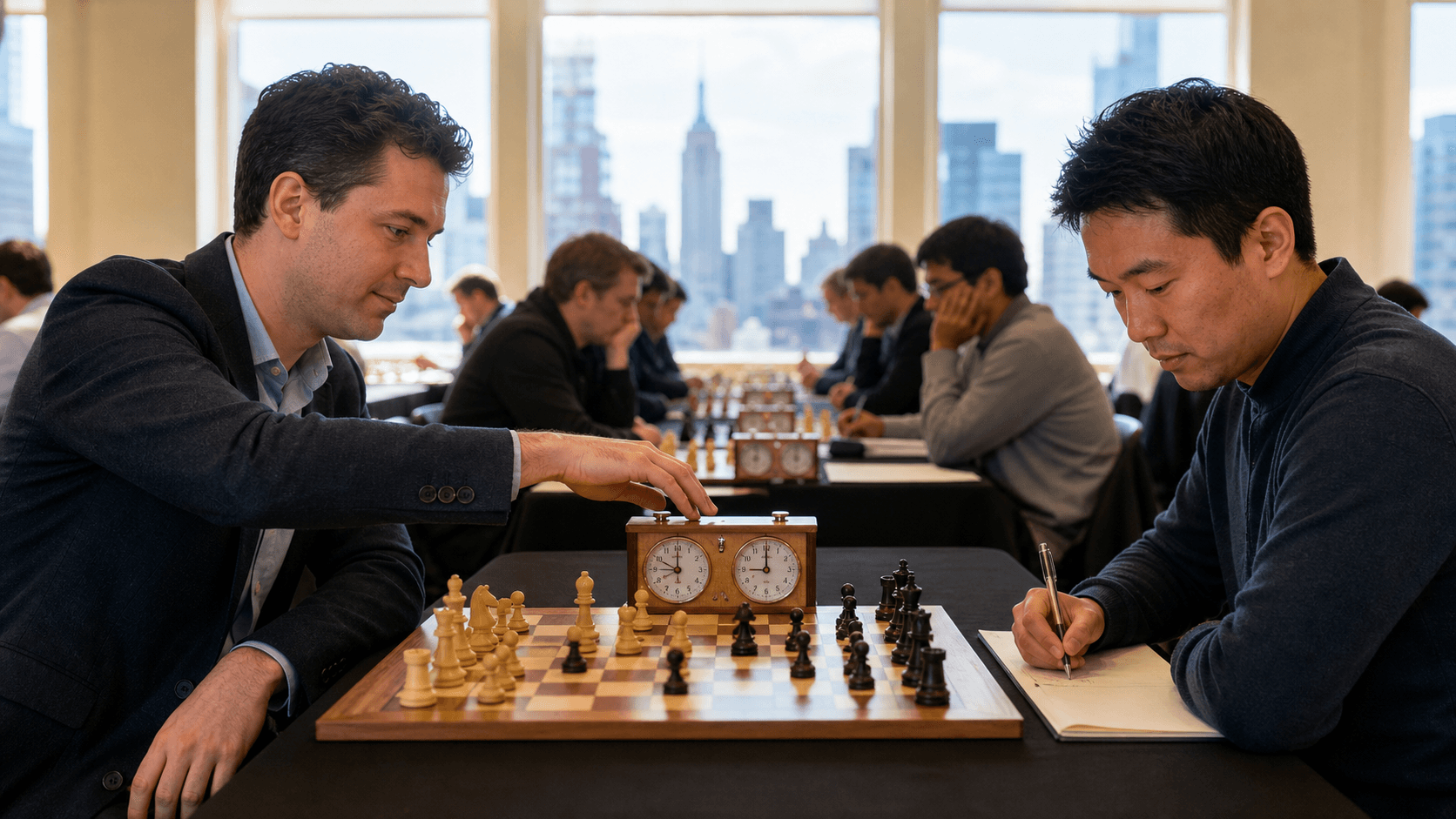
Moving from online games to your first over the board tournament can feel strange. You know how to move the pieces, you know your openings, but suddenly there is a real board, a scoresheet, a clock, and a tournament director watching the room. It can feel like a different game, even when the rules are the same.
Many adult improvers (and older teens and parents in our community) are making this shift right now, coming from online platforms into local USCF events in New York City and nearby regions. The good news is that every part of this change can be learned step by step. With clear habits and a bit of practice, your first tournament can feel calm and familiar instead of scary.
In our current training blocks, both in online classes and our in-person NYC groups, we are focusing on exactly this transition as we get ready for our upcoming weekend Swiss tournaments and our Central Park tournament-simulation sessions. Below, we walk through how to set up the board, write notation, handle the clock, and follow a simple checklist to get ready for your first USCF-rated event, including the club and park tournaments we have highlighted in our recent newsletters.
From Screen to Board: Recreating Your Online Position OTB
The first big shock for many online players is the physical feel of chess. Pieces have weight. Boards take space. There are no premoves, no arrows, no engine lines waiting after the game. That can feel uncomfortable at first, but it is also what makes over the board chess so satisfying.
In our current classes, we are building these habits directly into weekly lessons so that what you practice in class is exactly what you use at the board.
Start by getting very solid on basic setup. Do this until it is automatic:
- Place the board so a light square is on your right-hand corner.
- Put rooks on the corners, then knights, bishops, and then the queen and king.
- Remember "queen on her color": white queen on a light square, black queen on a dark square.
- Pawns go on the rank in front of the pieces.
In our adult and advanced-teen training groups, we often have students use a real set during online sessions. A coach shares a position on screen and asks the group to "mirror the screen" and build that same position on the table. We add "blind setup" drills too: students get a FEN or a simple description and set it up without looking back. Families in our youth groups will recognize this from our recent homework sheets, where students recreate class positions on a real board at home.
You can copy that same idea at home between classes:
- Spend 10 minutes each day on an "OTB warm-up."
- Take a position from your last online game and set it up on your board.
- Solve one or two tactics on a real board instead of the screen.
- Replay your most recent online game move by move, moving the pieces like a real tournament.
If you are joining our online lessons this cycle, a helpful habit is to keep a set next to your computer so you can follow along on both. Students and parents who do this quickly feel less "lost" when they sit at a real board in our upcoming practice tournaments and local rated events.
Mastering Chess Notation so You Never Lose the Thread
USCF tournaments require notation for most adult and older-teen time controls. That scoresheet is how you find out where you went wrong, and it is what you and your coach will use when you review your game in class or in a follow-up lesson.
The system used in USCF events is called algebraic notation. At first glance it looks strange, but it follows simple rules:
- Files are letters a through h from White's left to right.
- Ranks are numbers 1 through 8 from White's side to Black's.
- Each square has a name, like e4 or c6.
- Pieces are written with capital letters: K, Q, R, B, N. Pawns get no letter.
- A normal move is the piece letter plus the square, like Nf3 or Qd8.
- Captures use "x", like Bxe5.
- Check is "+" and checkmate is "#".
- Castling kingside is O-O, queenside is O-O-O.
- Promotions add the new piece, such as e8=Q.
In our current notation units, coaches often pause an online game and ask students to say the move out loud, then write it on a scoresheet template. This connects the visual move, the spoken move, and the written move all at once, so when students sit down at our upcoming in-house tournaments, the process already feels familiar.
To get ready before your first event, try this short plan (it matches what we are doing in class right now):
- Print a few sample scoresheets and write down the moves of 10 to 15 online rapid games.
- Watch a famous game and pretend you are at a tournament, writing each move as it appears.
- After class, bring your scoresheets to your coach and ask them to check for consistent notation.
If you like to plan ahead for the tournaments we have listed in our latest newsletter, you can also keep a small pack of scoresheets in your bag, along with the scoresheets we hand out during our simulation rounds.
Getting Comfortable With the Clock Before It Gets in Your Head
For many adults and older students, the clock is the most stressful part of OTB chess. Online platforms handle everything for you. In person, you must know both the rules and the feel of the clock.
We are currently practicing with the same time controls that will be used at our highlighted upcoming events, such as G/45 d5 and G/60 d5 for local weekend tournaments.
You will often see time controls like G/45 d5, G/60 d5, or G/90 +30. In plain language:
- G/45 d5 means each player has 45 minutes for the whole game, with a 5 second delay. The delay means the clock waits 5 seconds before it starts to tick down.
- G/60 d5 is 60 minutes with a 5 second delay.
- G/90 +30 is 90 minutes for each side and a 30 second increment. The increment adds 30 seconds every time you hit the clock.
Basic clock handling looks like this:
- The clock sits on the side of the board, usually to the right of the player with the black pieces, but follow local practice.
- The player with the white pieces starts the clock after making their first move.
- You make your move, then press your side of the clock with the same hand you used to move the piece.
- Try not to hit too hard or knock pieces over, and never touch your opponent's side of the clock.
Common beginner mistakes:
- Forgetting to press the clock and losing time for no reason.
- Pressing before you move, which is illegal.
- Moving with one hand and pressing with the other.
- Picking up the clock or pushing it around the table.
In our current tournament-prep weeks, we run practice rounds that use the same time controls as local events in Manhattan and the nearby regional tournaments we have featured in our newsletters. We talk a lot about "clock awareness": checking the time at natural breaks, like after a big trade or at move 20, so that students feel ready when they play these same controls on the weekend.
You can copy that feel at home between classes:
- Once a week, play a practice game with a real clock, even if it is with a friend or a family member.
- Start with a bit more time than your planned tournament control, then work your way down.
- Practice with delay or increment so you understand how it feels when the seconds bounce up and down near time trouble.
Your First USCF Tournament Checklist for Adult Improvers and Families
A simple checklist can turn your first event from scary to manageable. You do not need to guess what to do if you prepare a little bit in advance. This is the same checklist we are walking through in class as we get ready for the upcoming events listed in our current program calendar.
First, the basics of USCF logistics:
- Get or renew your USCF membership on the official site before you sign up for a tournament.
- Read the tournament flyer carefully: sections, rating limits, entry fee, round times, location, and any special rules.
- Decide if you need a bye for any round you cannot attend, and request it before the posted deadline.
- Look at a mix of local events: club tournaments, weekend Swiss events in Manhattan, school-based events that allow adults in open sections, and others listed on the US Chess Upcoming Tournaments page. We highlight a selection of these in each newsletter so families can see which options fit their schedules.
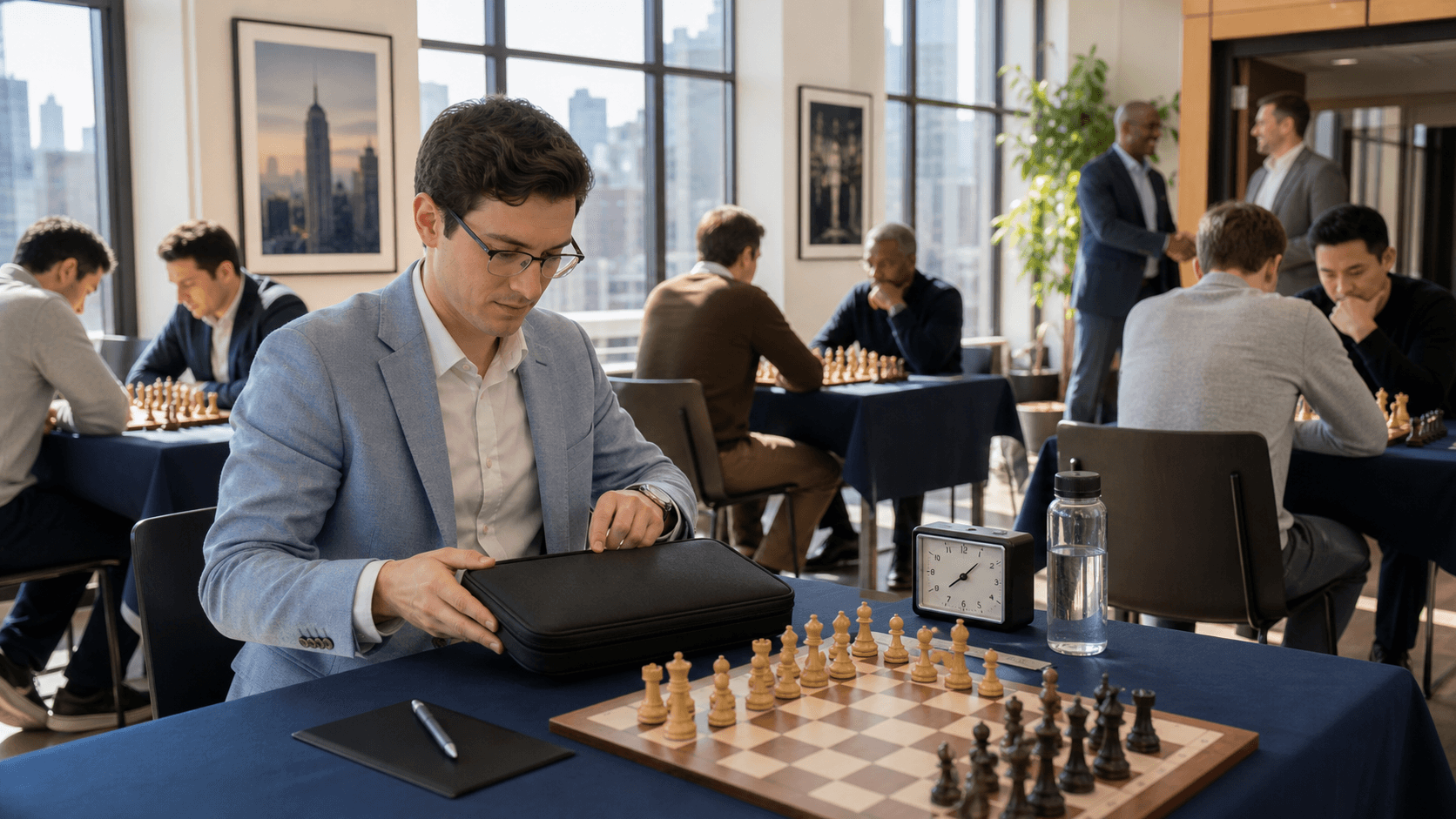
Next, your packing list. Plan to bring:
- A valid ID and your USCF ID number.
- A pen and, if allowed, your own scoresheets.
- Water and simple snacks that will not make a mess.
- Comfortable clothing, maybe an extra layer in case the hall is cold.
- A set and clock only if the tournament allows or requests them (we note this in our tournament reminders).
For mental prep, keep it simple and consistent with what we are doing in class:
- Review 2 or 3 main openings for each color, not your entire repertoire. Focus on the lines you have just studied with your coach.
- Make sure you know one basic endgame, such as king and pawn versus king, which we are currently emphasizing in our game-review segments.
- Use a quick "ETC" reminder: Equipment ready, Time management plan in mind, Courtesy and sportsmanship first.
On site, a steady routine helps:
- Arrive early, at least 30 minutes before round one.
- Find the posted pairings, then your board. Sit quietly, set up your pieces if needed, and breathe.
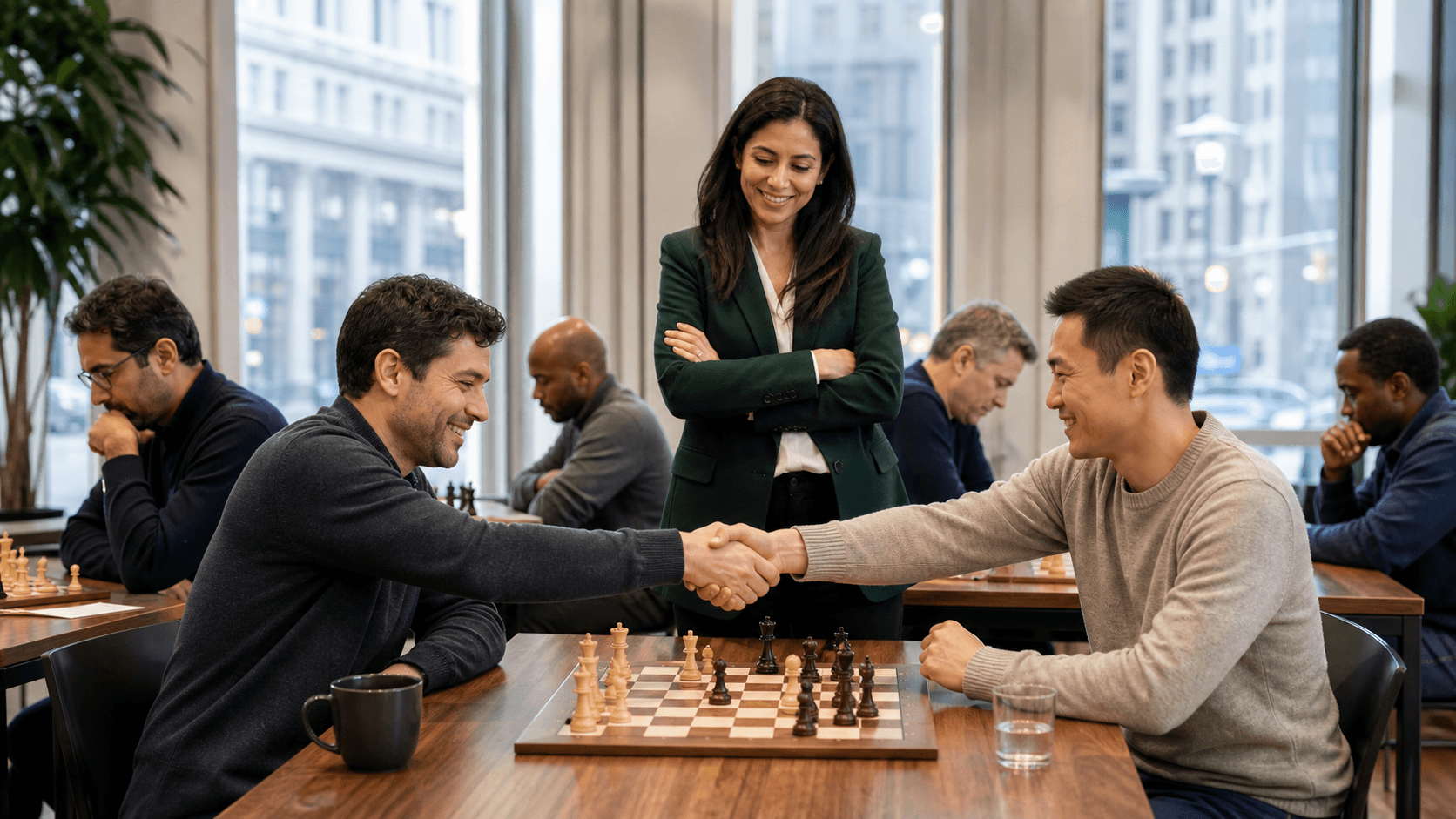
- If you have a problem or rules question, talk to the tournament director and not your opponent.
- Between rounds, avoid long blitz sessions that drain your focus. Short walks, light snacks, and quick game reviews work much better.
Adult students in our Central Park training programs and group classes, along with many of our youth tournament groups, go through "tournament simulation weeks" where we practice this exact routine so that nothing feels new on game day. Families will see these simulations on the calendar leading up to the main tournaments we recommend each season.
Building OTB Confidence with Guided Support
The move from online chess to USCF tournaments is not a personality test or a talent test. It is a skill set. Board setup, notation, clock handling, and tournament habits are all skills that can be learned, practiced, and improved with support.
As we build toward the upcoming tournaments featured in our newsletters and class announcements, one helpful step is to pick a specific event and work backward. Mark the date of your next planned tournament (for many students, that will be one of the weekend events we have listed this month), then schedule time each week for:
- Daily 10 minute OTB board warm-ups.
- Notation practice during your online games, matching the patterns we use in class.
- One or two timed games with a real clock.
- Simple review of your current class openings and one key endgame.
Working alongside coaches and classmates makes this much easier. Game review after your first tournaments can focus on more than "missed tactics." It can include your clock decisions, your body language, how you handled stress, and how ready you felt at the board compared to how we practiced in class.
With steady habits, guided practice in our programs, and a clear plan tied directly to the tournaments on our calendar, your first rating and your first score sheet can feel like the natural next step in your chess growth, not something to fear, for you, and for the families supporting you at the board.
Strengthen Your Strategy With Structured Adult Chess Training
If you are ready to take your game beyond casual play, our online chess classes for adults give you a clear path to improvement with live coaching and targeted feedback. At United States Chess Academy, we build each lesson around your current level so you can see real progress in your calculation, opening choices, and endgame technique. Get answers to your questions, schedule details, and personalized guidance when you contact us today.