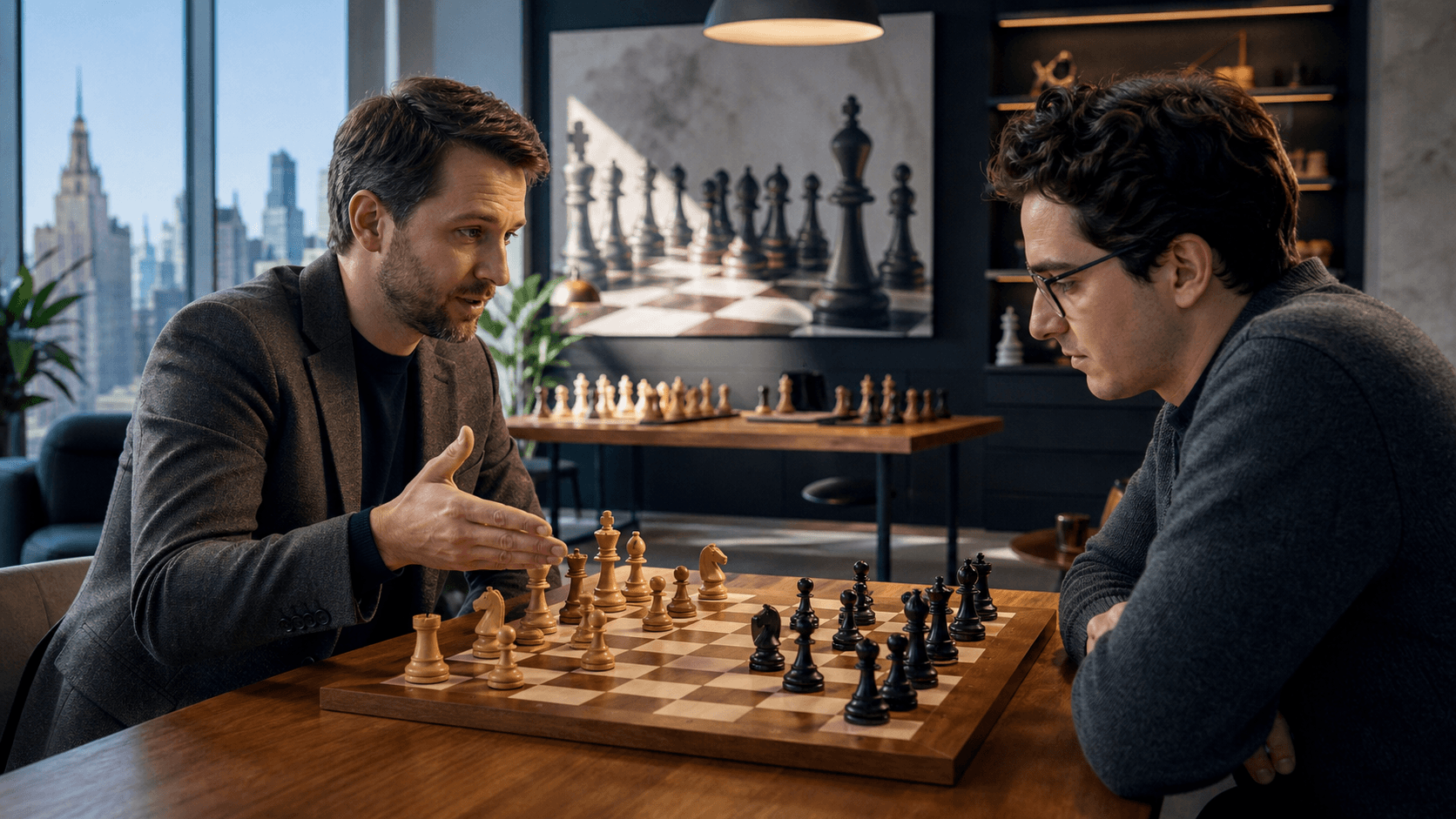
Fast, Focused Chess Training for Manhattan Professionals
Chess fits busy Midtown life better than many people think. You can walk out of the office, grab a quick bite, then sit down for a focused lesson that clears your head and trains your brain at the same time. The key is structure, not more hours in the day.
Our current adult programs are built around that reality. Long days, tight deadlines, late meetings, and a mind that still feels wired at 8 p.m. Chess gives you a clear goal, a way to de-stress, and a smart social circle right in the middle of Manhattan. You are not just pushing pieces; you are sharpening decision-making, pattern recognition, and patience in a low-pressure setting.
This season, we are tying adult training directly to what is happening in our classrooms and in our newsletter themes. Right now, that includes opening fundamentals, practical endgames, and real-game decision making leading into our upcoming in-house event cycle.
Here we will walk through how weeknight classes, tournament nights, and simple at-home training habits all work together. Even if you have not played seriously since school, you can plug into a routine that feels natural alongside your work and life in the city, and stays in sync with what our students and families are experiencing across the academy.
Why Chess Coaching for Adults in Manhattan Works
Adult players learn differently than kids. You already think in systems and priorities. You want to know why a move works, how it fits your style, and how it will help in your very next game. Our current adult coaching in Manhattan is structured around that.
Right now, our adult classes are focusing on:
- Clear goals, like building a solid opening set, gaining confidence in time pressure, or preparing for our upcoming in-house rated and unrated events
- Focused instruction instead of random topics, so each week builds on the last and connects to the themes we share in our monthly newsletter
- Feedback that connects directly to your recent games, including those played in our weeknight leagues and seasonal tournaments
A typical cycle at our school uses real student needs as the base. Games from recent in-house events and class tournaments often become the lesson. Coaches pull out key positions, show missed chances, and give you practical homework that fits a commute or lunch break, not a full free evening.
That might look like:
- A short tactics sheet tied to mistakes from last class or from our latest Thursday Tournament Night
- A model game to read on your phone during a train ride, chosen to match this month's newsletter theme (for example, "rook endings" or "attacking the king safely")
- One endgame pattern to practice twice before the next session, mirroring positions that have been coming up in both adult and scholastic games at the academy
Our coaching team helps by turning all of this into a simple plan instead of a long to-do list. The focus stays on practical skills that line up with our current class curriculum:
- Endgame basics you can actually remember under pressure, matching the endgame focus we are running across both adult and scholastic groups this month
- Calculation habits, so you stop blundering in sharp positions
- Time management tricks, like when to trust your intuition and move, especially with the same time controls used in our in-house tournaments
Regular check-ins keep busy professionals on track without guilt. Life will interrupt your study, but with a clear plan connected to our ongoing class themes and tournament schedule, you still move forward.
Weeknight Midtown Classes That Fit Your Calendar
For many Manhattan adults, the only realistic training window is right after work. That is why our current weeknight classes with predictable start and end times matter so much. You know exactly when you will be back on the train, and you can plan around it.
Adult groups this season are running in short, focused formats, for example:
- After-work slots that start early enough to catch people leaving the office, currently on
- Compact sessions that mix teaching and play in one block, aligned with this month's focus (for example, endgames in March, attacking play in April)
- Seasonal cycles that ramp up before our internal tournaments and our next academy-wide events, such as the
A typical class might look like this:
- Quick tactics warm-up to get your brain firing, using positions taken from recent student games and newsletter examples
- A themed lesson, directly connected to what we are highlighting this month across the school (for instance, "Converting a Material Advantage" before our next Friday Swiss)
- Guided sparring games using time controls that match our upcoming weeknight events
- Short review, where coaches highlight one or two takeaways you can apply right away in class tournaments or in our next league round
Logistics really matter when you are trying to make chess a habit:
- A Midtown location that is easy to reach from major subway lines
- Class times that do not swing around each week
- Small groups, so every student gets direct feedback and some one-on-one attention inside the group setting
If you travel often or need even more flexibility, pairing in-person study with online lessons can keep you connected to your coach and your training plan between trips. Our online work follows the same themes as our in-person classes, so you are always aligned with what the rest of the community is doing.
Tournament Nights That Feel Like a Midtown Chess Club
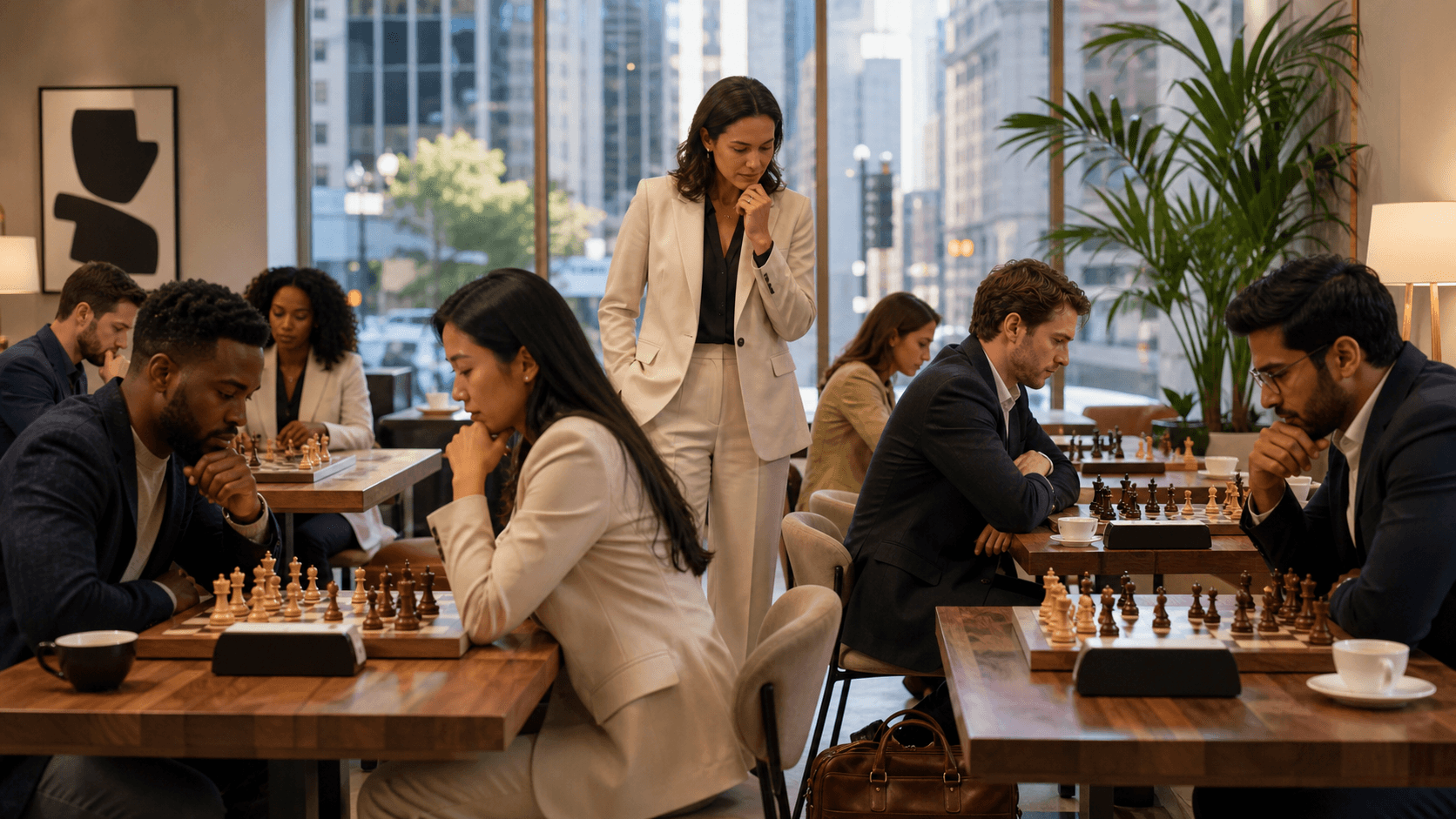
Training is important, but adults improve fastest when they have regular chances to test themselves. That is where our weekly and monthly tournament nights come in. The goal is to give you the feel of a club night in Midtown built around our current teaching themes and seasonal calendar.
Our adult tournament programs this cycle mix:
- Rated and unrated sections, so new and returning players can warm up before joining, for example, our next
- Serious but reasonable time controls that fit a weeknight and mirror what we use in our class leagues
- A friendly room where it is normal to hang around after games and talk positions, often side by side with our scholastic players finishing their rounds
Seasonal in-house tournaments and league-style match nights pair directly with what you learn in class. If our curriculum focus is rook endings this month, you will see those positions in our Thursday League. If the newsletter is highlighting attacking patterns, your next Friday Swiss is built around that theme in the pre-round mini-lessons.
Many adult students combine these club-style nights with bigger weekend events that we highlight for our families and adults in our newsletter, so everyone, kids, teens, and adults, can work toward the same target dates.
The benefits for busy adults are very concrete:
- You learn to manage nerves and time trouble in a familiar, supportive setting
- You get practice preparing for games, even with only a short time to review ideas after work, using the same lines you analyzed in class
- Coaches are often nearby for post-mortem analysis, so every result turns into real learning, and key positions may even appear in a future newsletter feature
These nights make chess part of your week, not just something you "should study" when you feel less tired.
From Office to Opening Prep: Building a Real Training Routine
The hardest part for most adults is not motivation, it is structure. You leave Midtown with your head full of meetings, and it can be tough to remember that sharp line in the Sicilian. That is why our adult programs focus on small, repeatable habits instead of giant study blocks, all aligned with what we are currently teaching.
Coaches build routines around items like:
- Curated tactics sets with themes that match your current weaknesses and the month's academy-wide focus
- Short annotated game collections you can finish in one sitting, chosen to match our newsletter articles
- Newsletter themes that guide what you should focus on this month, such as "handling opposite-colored bishops" or "attacking with your heavy pieces"
Here are some micro-routines that fit well with a Manhattan lifestyle and our present curriculum:
- On the train: 10 to 15 minutes of tactics on your phone, using the same pattern types you saw in class and in our weekly puzzle email
- Before bed: read one annotated game from our recommended list for this month's theme, saying moves out loud and pausing at key moments to guess the next move
- Sunday reset: review your latest tournament game from our league or in-house events, add quick notes, and list one thing to fix next week that matches your coach's feedback
These habits connect directly back to lessons and tournament nights, so nothing feels random. Coaches can adjust your plan around:
- Busy work seasons and late nights
- Travel or family events that cut into your study time
- Upcoming tournament schedules, both for our internal cycles and the external events we are currently recommending to our families and adult players
This way you keep improving at a steady pace, even when life is full, and you stay in step with the rest of our community.
Joining a Community of Serious Adult Improvers
One of the best parts of our Midtown chess program is the people you meet. Many adults come straight from the office, play a few serious games in our league or tournament nights, then stay to chat over a critical position from round two. Over time, that turns into a real community, not just a class list.
Right now, our adult groups are closely connected to what our families and scholastic players are doing:
- Informal post-class analysis groups at spare boards, often reviewing positions that also appeared in kids' classes and newsletter diagrams
- Occasions where adult players can watch or help with kids' events, such as our upcoming , which is often eye-opening and fun
- Recognition for recent results in newsletters or rating ladders that include both adult and youth highlights
Different adult levels blend together nicely when they share the same coaching team and tournament calendar that our families follow. You might have:
- Newer players learning basic opening principles that echo the foundation work in our beginner scholastic classes
- Returning players dusting off old skills and updating their repertoires in time for the next school-year tournament cycle
- Experienced club players sharpening for the same city tournaments and regional events that many of our top scholastic players are targeting
We keep adults connected to the larger chess activity around the city by highlighting specific events in our newsletter and class announcements, so you always know which tournaments our students and families are preparing for.
Over time, themed study months, rating ladders, and shared challenges help everyone pull in the same direction. You are not just learning alone; you are part of a group of serious adult improvers and families who understand each other's schedules and goals and are often preparing for the same upcoming tournaments.
For adults who want even more structure or cannot always make it in person, pairing community activities with a few tailored online sessions or camps like the Central Park camp keeps your training aligned with what we are doing on site. These programs follow the same themes and tournament calendar we share with families, so everything feels connected and intentional, no matter how busy Midtown life gets.
Start Advancing Your Chess Skills With Expert Coaching
If you are ready to take your play beyond casual games and online puzzles, our personalized chess coaching for adults in Manhattan is built around your specific goals and schedule. At United States Chess Academy, we focus on practical training that helps you think more clearly at the board and perform better in real games. Tell us about your experience level and objectives, and we will match you with a coach who fits your style. To discuss options or schedule your first session, please contact us.