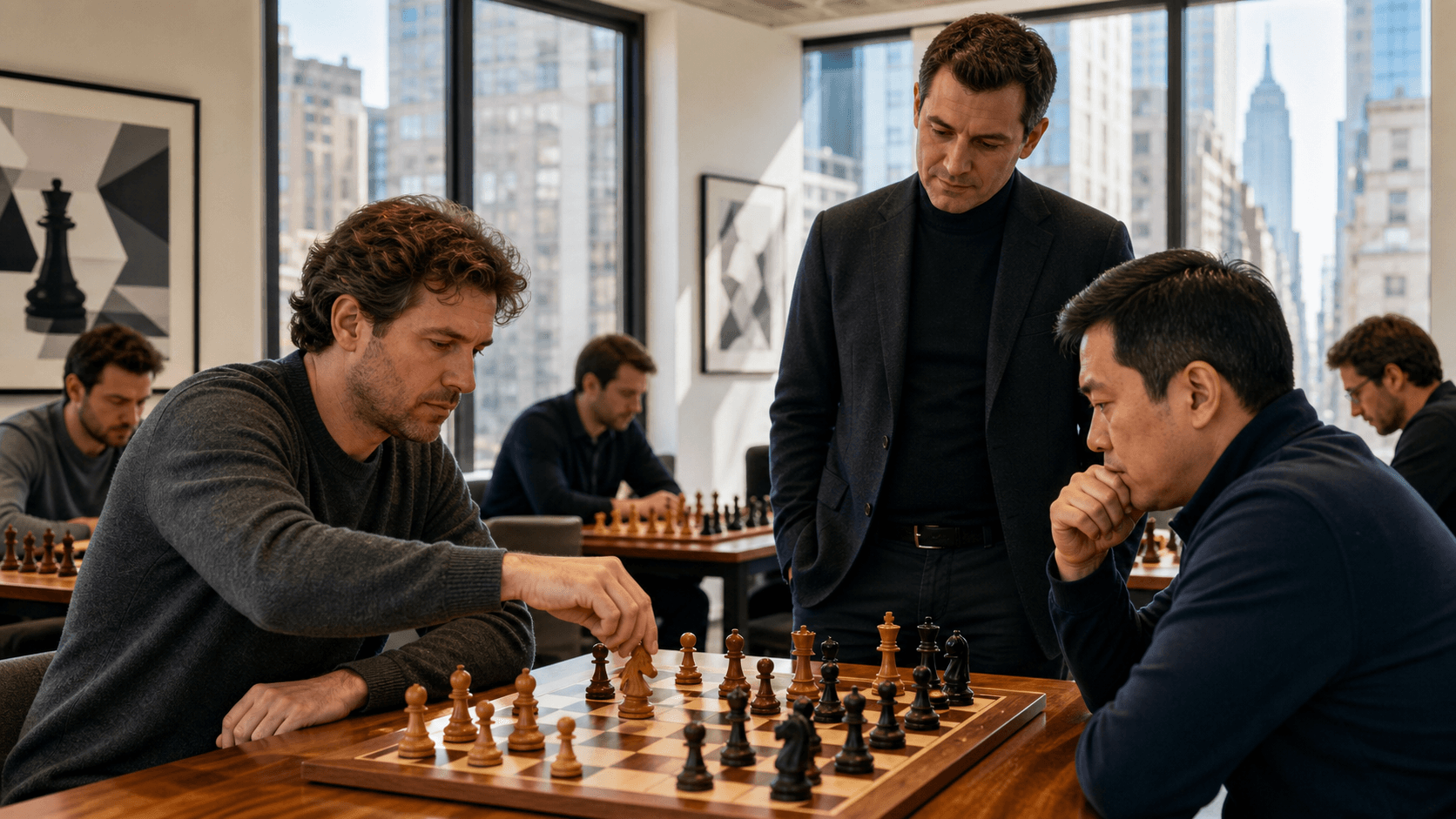
Building Confident Middlegame Vision in NYC Class Games
Middlegame chess is where class games in Manhattan are usually decided. Openings get you started and endgames finish the story, but the middlegame is where plans, nerves, and time on the clock all come together. When players hit that stage with no clear idea of what to do next, good positions can slip away very fast.
At United States Chess Academy, we talk a lot about middlegame vision. For us, that means seeing plans, not just single moves. It means recognizing patterns and knowing what really matters in a position when there are many tempting choices. In our current Manhattan classes and online lessons, this is a core focus for the fall term, and we connect it directly to what students and families see in our weekly class updates and newsletter themes on "improving your worst piece" and "handling complex middlegames," so everything students hear and see feels coordinated.
When we say "middlegame vision," we mean three things working together:
- You see plans, not random moves
- You spot familiar structures and patterns
- You know which details matter right now, and which can wait
In this fall's events around the city, from local scholastics to strong tournaments like the Hunter events and other Manhattan competitions on our calendar, these skills often separate players who score a bit above 50 percent from those who suddenly start putting together real winning streaks.
What Middlegame Chess Vision Really Means for Developing Players
Many developing players know a decent amount of opening theory. They can play 10 or 15 moves at high speed, then suddenly stop and think, "Now what?" That feeling is the gap between memorized lines and real middlegame chess understanding.
This month in class and in our newsletter series on fall tournament preparation, we are encouraging students to make that shift from "I know this opening" to "I understand this position." That shift starts with a few simple but powerful ideas we repeat across our current units:
- King safety: Is my king safe? Is my opponent's king safe? Where could an attack appear next?
- Piece activity: Which pieces are doing something useful, and which ones are just sitting on the back rank?
- Pawn structure: Where are the pawn weaknesses, holes, backward pawns, and strong pawn chains?
- Imbalances: Who has the better minor pieces, space, initiative, or long-term plan?
Our coaches train students to ask clear questions at the board instead of guessing. We encourage them to pause at critical moments and run through a short checklist that we are currently reinforcing both in lessons and in our newsletter diagrams:
- Where are the weaknesses for both sides?
- Which of my pieces is worst, and how can I improve it?
- What is my opponent threatening right now, and what would they like to do next?
By turning these questions into a habit, students start to "see" the middlegame, rather than just calculating random moves. Families will recognize this language from our recent emails and handouts before weekend tournaments.
Inside Our Manhattan Training: How We Build Middlegame Habits
In our Manhattan classes this fall, we are giving middlegames their own dedicated space as we prepare for the upcoming scholastic tournament cycle. A typical segment focused on middlegame chess looks like this:
First, a coach sets up a clear middlegame position on the demo board, often taken from a real tournament game played by one of our students in recent city events. The group studies it quietly for a few minutes. Then students suggest plans and candidate moves while the coach guides them through a structured thought process. We talk about which side should attack, where the weaknesses are, and how each player might improve their worst piece.
We lean heavily on our students' real games from the current season. Our coaches regularly collect key middlegame moments from:
- Recent Manhattan scholastic and adult events on our schedule
- In-class training games from this term
- Online sparring sessions from our online lessons that mirror our fall themes
Those positions become the core of our group analysis. Students recognize their own mistakes and also see that others struggle with the same types of decisions. It creates a shared learning experience that carries from board to board and matches what families see in our annotated examples in the newsletter.
To make those lessons stick, we use specific training tools that are also reflected in our current homework packets and online sets:
- Thematic positions on the demo board focused on one idea at a time
- Interactive quizzes where students "vote" on plans and then explain their thinking
- Online homework positions that mirror the exact structures they saw in class
This way, what happens at the board in Manhattan does not stay only there. It is supported by homework, online training, and seasonal programs like our upcoming Central Park camp sessions, where the same middlegame themes and tournament-prep routines keep returning.
From Classroom Board to Fall Tournaments
Training is most valuable when students can use it in real games. As the fall tournaments across Manhattan and the tri-state-area on our current calendar approach, we time our lesson plans so key middlegame themes are fresh when students sit down at the board.
In class, our coaches talk openly about how to carry concepts from lessons into these specific events. We help students build simple transfer strategies, such as:
- A short pre-round checklist: "How will I handle complex middlegames today? What will I do if I get surprised in the opening?", the same checklist we have been sharing in our latest newsletter series on fall tournament routines
- Clear time management rules, like slowing down when many pieces are still on the board and the position is sharp
- Emotional control ideas, such as taking a short walk after a tough game and then calmly reviewing the critical middlegame turning point
Families often see this in action at weekend events that we've highlighted in our monthly schedule email. Before rounds, coaches may remind students about a recent newsletter theme, like "improving your worst piece first" or "not rushing the attack." After the round, we look at the score sheet together, often jumping straight to the key middlegame moment to ask, "What were you thinking here?"
Between tournaments, we adjust each student's study plan so that practice targets the types of middlegame positions they are actually facing this season. The goal is steady, game-by-game improvement that matches the rhythm of the current tournament schedule, not quick fixes.
Pattern Recognition and Calculation Drills We Use Every Week
Middlegame vision grows from two big skills: recognizing patterns and calculating accurately. In our weekly training, both in Manhattan classrooms and through our online work, these skills are front and center and are the focus of this term's class cycle and newsletter puzzles.
On the pattern side, we highlight recurring middlegame themes that match the structures students are seeing in this fall's tournaments:
- Typical attacking patterns against a castled king
- The minority attack in common pawn structures from our current class openings
- Good vs bad bishops and how to fix or punish them
- Knight outposts and how to build them with pawn support
Students see these ideas again and again, from different angles and positions, so they start to spot them fast under tournament pressure.
Alongside pattern work, we build layered calculation. A normal progression for a class or study group in this cycle might look like this:
- 1 to 3 move tactics to sharpen "tactical vision"
- 3 to 5 move forcing lines focused on checks, captures, and threats
- 5 to 7 move calculation challenges taken from real Manhattan class games and recent student tournaments
We scale these drills to the group. Younger beginners focus more on basic tactics and simple plans. Advanced kids and adults work with deeper positions and must compare multiple candidate moves in detail. Many of these exercises are shared again in our newsletter puzzle sets and on our training page, so families can recognize the exact diagrams their children saw in class.
Over time, repetition and structure turn scattered knowledge into steady habits. Students stop guessing and start backing up their choices with clear, repeated thought patterns.
Partnering with Families to Support Middlegame Growth
Middlegame chess does not grow only in the classroom. Families play a big role in helping students reflect on games, keep good records, and stay mentally ready for the next event on our shared tournament schedule.
Parents do not need to be strong players to help. A few simple habits, which we are also outlining in this month's family newsletter, can make a big difference:
- Set up a regular weekly review time to go through recent games from the current tournament cycle
- Ask guiding questions like "What was your plan here?" instead of giving moves
- Help your child write down or save key positions that felt confusing or stressful
Our Academy resources this season are built to support this kind of teamwork. We encourage families to:
- Read the monthly newsletter with their child so the student hears the same middlegame themes at home and in class
- Bring printed tournament score sheets from the upcoming and recent events on our calendar to lessons so coaches can highlight the main middlegame turning points
- Use our current online practice recommendations between classes so the same structures keep coming up in training and games
When everyone is connected, the goal becomes clear and shared: students walk into each round with a middlegame mindset. They know they will not play perfectly, but they trust their process. Families understand the skills we are focusing on this season and can spot signs of growth, like better time management, fewer random sacrifices, and stronger plans.
Middlegame chess will always be challenging, especially in the sharp, competitive games we see across Manhattan and nearby events. But with consistent training that aligns with our current class themes, clear habits tied to the upcoming tournaments on our schedule, and support from both coaches and families, students can turn that difficult part of the game into a real strength that shows up on the scoreboard.
Strengthen Your Chess Middlegame With Expert Coaching
If you are ready to turn solid openings into winning positions, our structured middlegame chess training can guide you move by move. At United States Chess Academy, we focus on practical patterns, planning, and calculation so you know what to do when the theory ends. We tailor each lesson to your level and goals so you can convert more games into confident wins. Have questions about the right program for you? Just contact us and we will help you choose your next step.