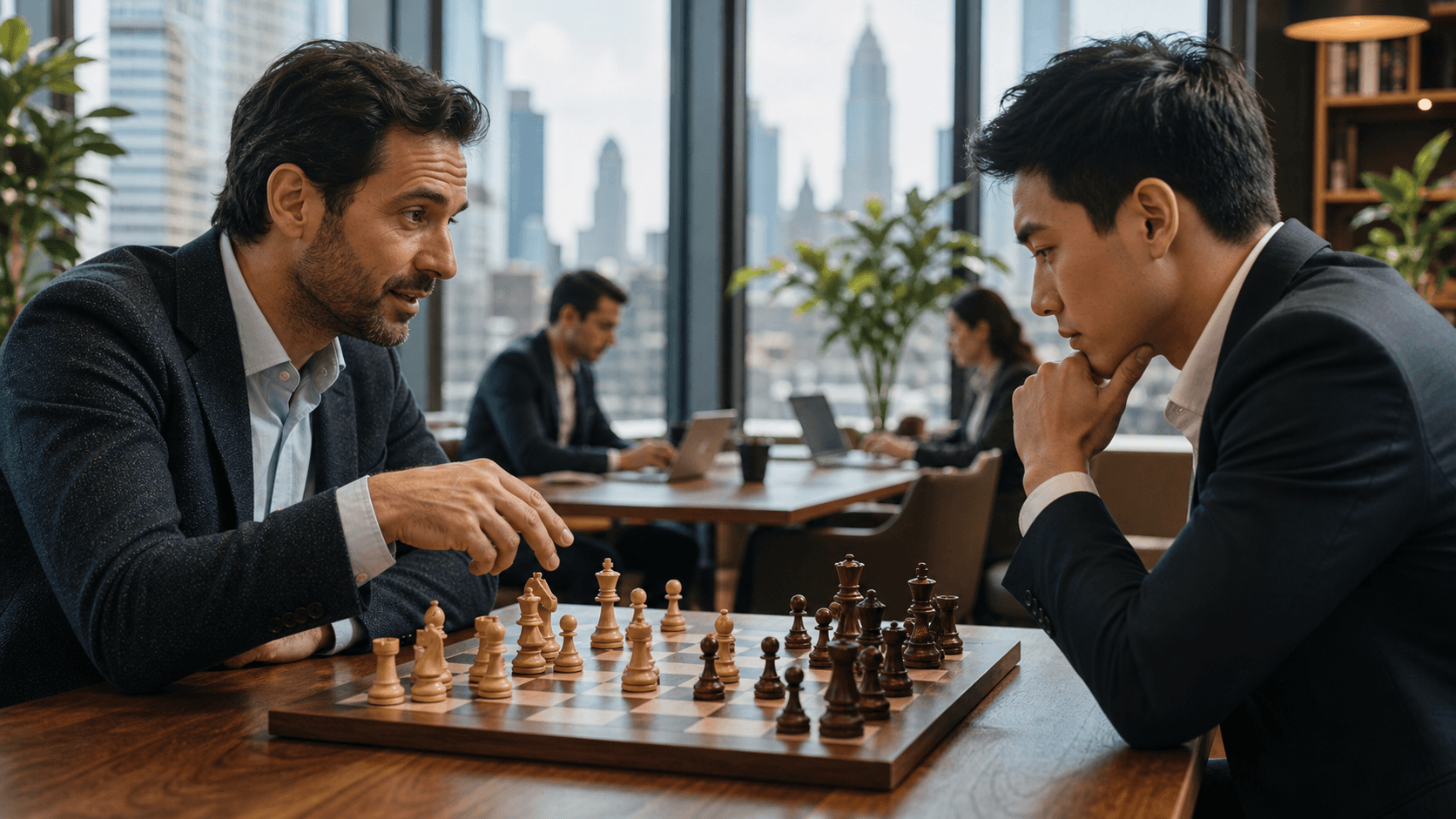
Upgrade Your Game and Your Career with Chess
Serious work requires a serious mind. If you are an ambitious professional in Manhattan, your brain is your main tool, and it needs real training, not just coffee and long meetings. Chess gives you a clear way to sharpen that tool while also giving you a structured break from your screen.
Regular chess study trains skills that show up every day at work: strategic thinking, better decisions when time is short, deeper focus, and stronger pattern recognition. This guide is about how to choose a chess instructor in Manhattan who understands adult learners, busy schedules, and high-pressure careers. As summer winds down and work ramps up again, this can be a smart time to build a new routine that supports both your game and your career.
Why Chess Is the Ultimate Skill Upgrade for Adults
Chess is more than a hobby. It is a workout for long-term thinking. When you train in a serious way, you learn to:
- Concentrate for longer stretches without drifting
- Plan several moves ahead instead of reacting in the moment
- Weigh tradeoffs, not just short-term gains
- Stay calm when the position looks messy or unclear
These habits carry over into the office. Preparing for a big meeting can feel like preparing for a complex position: you study options, think about your opponent's likely replies, and decide where the real risks are. Deadlines feel less chaotic when you are used to managing the clock in a tight chess game.
For many adults, there is also a deeper reason to study. You might want:
- An intellectual challenge that is not tied to your job
- A screen-light hobby that still feels serious and meaningful
- A way to keep your mind sharp as your career gets more demanding
A good instructor who works with adults will not just show you moves. They will connect chess ideas to the way you already think. For example, a lawyer might relate a position to building a case, a finance professional might think in terms of risk and return, and someone in tech might relate it to system design or debugging. The right coach will speak your language and help you connect the board to real life without turning every lesson into a business seminar.
What Adult Learners Need From a Chess Instructor in Manhattan
Adults learn very differently from kids. You have less free time, more stress, and a clear sense of what "wasted time" feels like. Your chess instructor in Manhattan should respect that.
First, scheduling and flexibility matter a lot:
- Evening and weekend options
- A plan for handling last-minute work issues
- Hybrid setups, like mixing in-person and online lessons
Teaching style is just as important. Many adult learners want:
- Goal-based lessons tied to clear outcomes
- A simple, realistic study plan between sessions
- Explanations in plain language, not deep theory with heavy jargon
The environment also plays a role. A central Manhattan location near major transit can save you time and stress. Some players like a quiet, professional space, while others are fine in a school-style setting. The key is that you can think clearly without constant noise or distraction.
You should also be clear about your own goals. Do you want to:
- Prepare for your first USCF tournament?
- Raise your online rating in rapid or blitz?
- Use chess as a weekly reset that sharpens thinking for work?
Knowing what you want makes it much easier to judge if an instructor is a good match for you.
Key Qualities of a High-Level Manhattan Chess Coach
In a city full of strong players, it helps to know what to look for. For serious adult learners, credentials are more than just letters after a name, but they do matter. Titled coaches like FIDE Masters, International Masters, and Grandmasters bring a depth of understanding that is hard to replace. Just as important is a track record of teaching, including clear improvement in students and stories of adults who made real progress.
High-level coaches tend to offer an adult-focused curriculum that covers:
- Opening principles, not just memorized lines
- Middlegame planning and typical patterns
- Core endgames that decide real games
- Calculation and decision-making practice
You should expect homework that is realistic for your schedule, plus regular check-ins on your progress. Modern tools are also part of serious training. Many strong instructors use databases, online training platforms, and annotated games to keep your work organized. If you lean toward online learning, ask how they use tools like shared boards or recording so you can review lessons later. A program like the academy's online lessons is designed with this kind of structure in mind.
Finally, professionalism matters:
- Clear expectations and lesson structure
- Reliable start times and communication
- Transparent policies, including how scheduling changes work
The relationship should feel closer to mentoring than casual tutoring, with respect on both sides and a shared focus on long-term growth.
Online vs in-Person Chess Training for Busy New Yorkers
If you live or work near Midtown, in-person sessions can be a powerful choice. Face-to-face play helps you build tournament habits: handling the clock, staying locked in on a physical board, and managing nerves across the table. A local instructor can also plug you into the broader Manhattan chess scene, from weekend events to larger tournaments around the city.
The area offers many chances to test your skills, including well-known scholastic and open events, Central Park activities, and strong tournaments at schools and clubs throughout Manhattan. Learning over the board makes it more natural to step into those spaces later.
Online lessons have their own set of benefits:
- No commute, which is a big deal if you are working long hours
- Flexibility to learn from home, the office, or while traveling
- Easy recording of sessions for later review
For many professionals, a hybrid setup feels best. You might train in person when your schedule is lighter, such as late summer, then switch to more online sessions during peak periods at work or heavy travel weeks. A structured program that supports both formats lets you keep building on a strong base, instead of stopping and starting every time life gets busy. Some learners even use a mix like in-person strategy work plus online tactic training or game review, so time on the board is always purposeful.
If summer gives you a bit more breathing room, it can be a natural time to build that in-person base, get to know your instructor, and then lock in a rhythm that can survive the busy fall season.
How to Compare Programs Like United States Chess Academy
Choosing a chess instructor in Manhattan through a reputable academy can give you a layer of quality control that is hard to match when you are searching on your own. Still, it helps to ask clear questions.
When speaking with any program, ask:
- Who actually teaches adults, and what is their background?
- What is the coach-to-student ratio in any group setting?
- Is there a trial or evaluation lesson so you can test the fit?
- How do they adjust plans for people with demanding jobs?
Look for adult-specific paths such as:
- Fast-track basics for new or returning players
- "Back-to-chess" structures for people who played years ago and want to rebuild
- Rating-focused programs if you care about competitive results
Elite academies often stand out through access to grandmaster-level insight, curated study plans, and strong training partners. Many also track your performance over time so you see clear progress, not just random lessons. Structured activities, whether local training groups or special events like Central Park camps, can give you both instruction and community. Programs similar to the academy's Central Park training options are good examples of learning paired with live play.
If you are comparing different schools, pay attention not only to who teaches, but to how stable the system is. Working with an academy means that if your primary coach changes schedule, there is usually another vetted instructor who can step in without breaking your momentum. Some even let you manage your training plans through simple online tools and secure booking systems, similar to how structured lesson carts are handled in organized programs like this type of setup.
Make Your First Move Toward a Stronger Mind
The best way to start is by choosing one clear goal. For example, you might decide to reach a certain online rating, play a first rated tournament in Manhattan, or simply commit to one focused training session each week as a mental reset from work. The goal does not have to be grand; it just needs to be specific enough that you and your future coach can build around it.
From there, a simple decision checklist can help:
- Timing: Can you protect at least one regular time slot before your schedule fills up again?
- Budget: What level of ongoing training feels realistic for you?
- Format: Do you prefer in-person, online, or a mix of both?
- Personality fit: Do you feel comfortable asking this coach questions and admitting what you do not know?
When you bring those answers to your first conversation with an instructor or academy, it becomes much easier to create a training plan that respects both your career and your energy level. Starting now means you can head into your next busy season with sharper focus, stronger decision-making skills, and a chess practice that feels like a smart investment in your own mind, not just another item on your to-do list.
Start Building Strong Chess Skills With Proven In-Person Coaching
If you are ready to help your child or yourself grow confidently at the board, we invite you to work with a dedicated chess instructor in Manhattan from United States Chess Academy. We focus on clear instruction, structured improvement, and personalized feedback so each student can see real progress. To discuss goals, scheduling, and the best program for you, please contact us today.